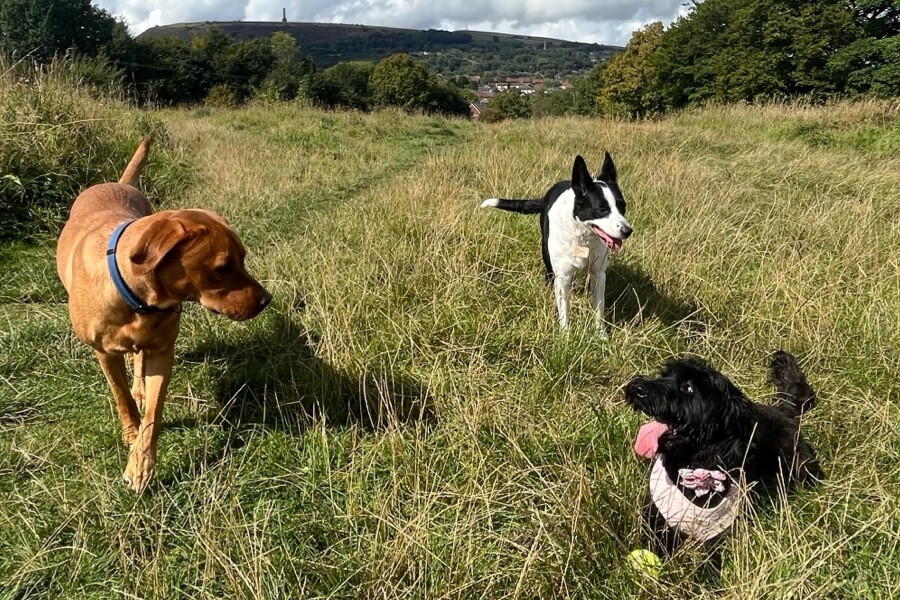
Most people know dogs need walks and a bit of play, but not everyone realises how different breeds are when it comes to what actually keeps them happy.
Some dogs don’t need much more than a quick walk around the park and a comfy sofa to snooze on, while others love to wake up at the crack of dawn, ready for a full day of activities before breakfast.
If you have ever wondered why your neighbour’s Labrador settles after a long run, yet your Dachshund still paces up and down the house looking for something to do, this is why. Different breeds have very different exercise and enrichment needs.
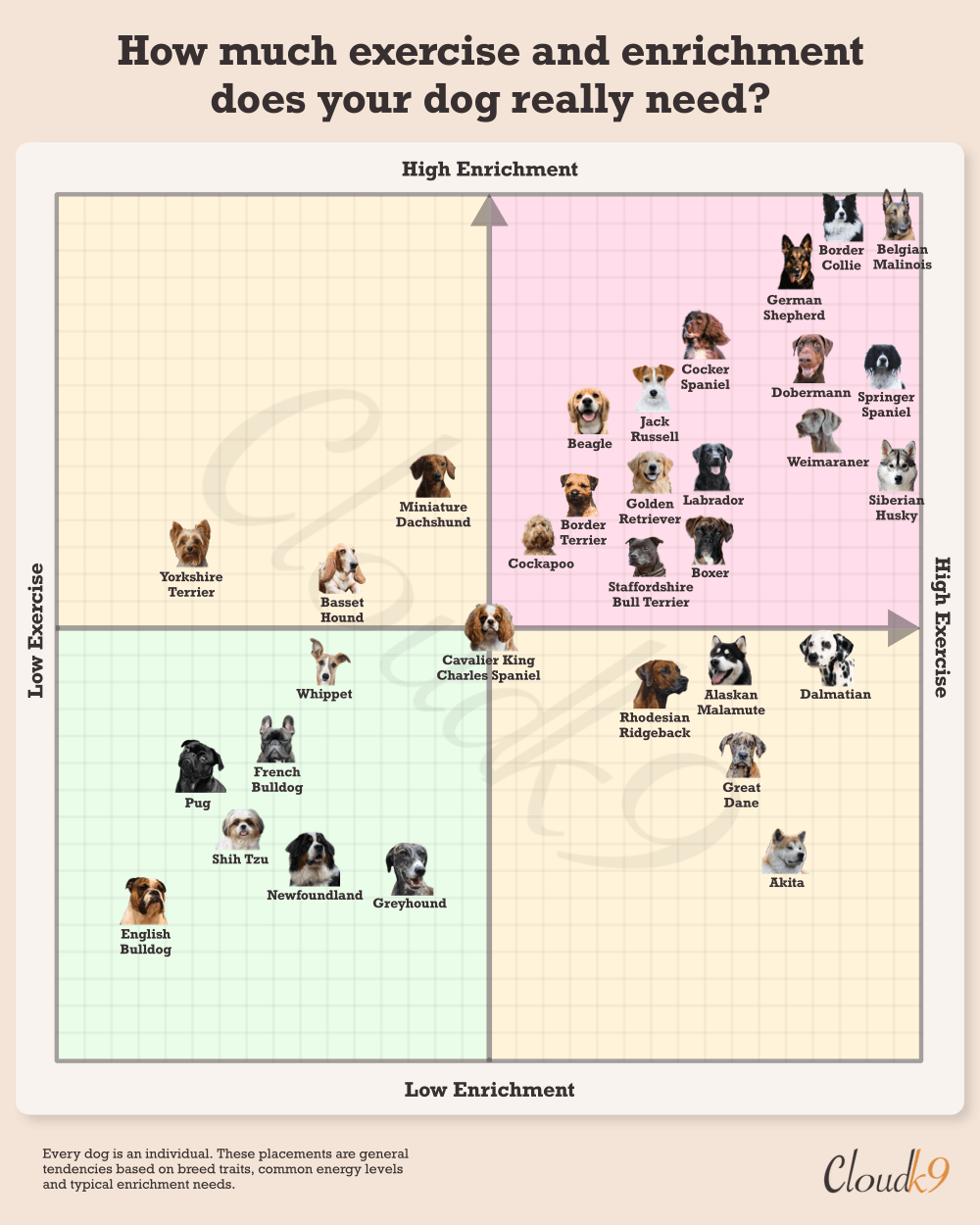
So we created the Dog Exercise and Enrichment Compass to give owners a clearer idea of where their dog might sit. It is not a strict guide because every dog is different. It’s just a helpful way to get an idea of what kind of balance your dog might need to be happy and fulfilled.
Share this infographic on your site:
- Border Collie: Very high exercise and very high enrichment needs.
- Belgian Malinois: Extremely high exercise and mental stimulation needs and best suited to owners who can offer structured work and daily training.
- Cavalier King Charles Spaniel: Low exercise but benefits from plenty of gentle mental stimulation.
- Labrador Retriever: High exercise with moderate enrichment needs, especially during adolescence.
- Greyhound: Low enrichment and lower exercise than many people expect.
- Dobermann: high exercise and high mental stimulation and thrives on structured work.
- Miniature Dachshund: Low exercise but enjoys enrichment and scent based activities.
What Exercise and Enrichment Actually Mean
People often use these words as if they are the same thing, but they do completely different activities for your dog.
Exercise
This is the physical side of things. Walks, play, running, swimming, anything that gets them moving. A dog with high exercise needs won’t be very happy with a slow lifestyle, while others are perfectly fine with short outings and even missing the odd walk.
Enrichment
Enrichment is all about using their brain. It helps a dog feel calm, settled, and satisfied (it’s often even more tiring for your dog than physical exercise). Sniffing, problem solving, training, chewing, anything that makes them think or use their natural instincts. Some dogs are mentally switched on all the time and really need hours of mental stimulation every day to feel content.
If you’re doing plenty of walks and exercise with your dog, but they’re still causing chaos at home and chewing things they shouldn’t be, they probably need some more mental enrichment.
Breaking Down the Four Quadrants
The compass places breeds based on their usual tendencies. It is a general guide, not a judgment.
Low Exercise and Low Enrichment
These are the classic sofa dogs. Pugs, French Bulldogs, English Bulldogs, Shih Tzus, the ones who love a gentle walk and prefer to relax the rest of the day at home. They still need things to do, of course, but they are usually happy with simpler activities and shorter walks.
Low Exercise and High Enrichment
These dogs are an interesting mix. They do not always need long walks (usually because of their size), but their brains stay busy. Cavaliers, Miniature Dachshunds, Border Terriers, and Miniature Schnauzers often fall into this area. They like puzzles, training sessions, and anything that makes them think because of the working dog traits they have in them.
High Exercise and Low Enrichment
These are usually the gentle giants. Greyhounds and Great Danes enjoy exercise but do not usually demand complicated training or constant mental work. They love a proper walk or a zoom around, then they are happy to rest.
High Exercise and High Enrichment
Then we get to the working dogs. The crazy ones! Border Collies, Belgian Malinois, working Cockers, German Shepherds, and Dobermanns. These dogs need both mental and physical work every day.
When you meet one that has had enough stimulation, you’ll know it straight away. It’s probably the only time you will see them relaxed when they’ve finally done enough for the day.
Why Understanding This Makes Life Easier
A lot of common behaviour issues come from a mismatch in needs. Chewing, barking, restlessness, zooming round the house, pulling on the lead, refusing to settle, all of these things can show up when a dog feels under-stimulated or over-stimulated.
You can also see the opposite problem. Some breeds struggle if they are pushed too hard. Long walks with a flat-faced breed in warm weather can be dangerous. Puppies, small dogs, older dogs and certain breeds often need shorter but more thoughtful sessions that focus on sniffing or gentle training.
Getting the balance right makes everything feel calmer and more manageable at home. Dogs become easier to train, more predictable, and much more manageable to live with.
How to Support Your Dog Based on Their Needs
Here are a few simple ideas depending on which part of the compass your dog fits into.
For dogs with low exercise needs and low enrichment needs:
- Short and predictable walks
- Comfortable sniffing routes
- Chews and simple enrichment, like a stuffed Kong or a snuffle mat
For dogs with low exercise but high enrichment needs:
- Short walks, but plenty of thinking games and sniffing
- Puzzle feeders
- A bit of training each day with some high value training treats, even if it is just a 15-minute session
For dogs with high exercise needs and lower enrichment needs:
- Regular walking throughout the day
- Fetch or recall practice in safe spaces
- Free running in secure fields if you have access to one
For dogs with high exercise and high enrichment needs:
- Rotate different activities
- Use scent work, obedience, retrieving, and structured games
- Keep enrichment varied so they don’t get bored
- More challenging and breed-specific outlets
- Free running in secure fields if you have access to one
- Long lasting natural chews to have at home during down-time
Breeds Shown on the Compass
The chart includes 32 popular breeds that most people in the UK will recognise, from working dogs to sofa lovers.
High exercise and high enrichment: Border Collie, Belgian Malinois, German Shepherd, Dobermann, English Springer Spaniel, Working Cocker Spaniel, Weimaraner, Siberian Husky, Labrador, Golden Retriever, Boxer, Jack Russell, Beagle, Border Terrier, Staffordshire Bull Terrier and Cockapoo.
High exercise and low enrichment: Rhodesian Ridgeback, Alaskan Malamute, Dalmatian, Great Dane and Akita.
Low exercise and high enrichment: Miniature Dachshund, Basset Hound and Yorkshire Terrier.
Low exercise and low enrichment: Whippet, Greyhound, French Bulldog, Pug, Shih Tzu, Newfoundland and English Bulldog.
The Cavalier King Charles Spaniel sits right in the middle as a baseline, so you can compare every other breed against a dog with fairly average needs on both counts.
Each one has its own tendencies, and the chart reflects the traits these breeds are best known for.
Final Thoughts
Every dog is different, even within the same breed, but understanding what your dog naturally leans towards makes life so much easier. When you meet their needs properly, the change in their behaviour can be huge. They settle better, listen more, and generally feel more secure.
The Dog Exercise and Enrichment Compass is simply a guide to help you understand your dog a little more. Use it as a starting point, try a few new activities, and see what your dog enjoys. You might be surprised by what works for them.
And if you need help choosing natural dog treats and chews or enrichment ideas for your dog, Cloud K9 is always happy to point you in the right direction.
Sources: The Kennel Club
Cloud K9 was created for dog owners who want the best for their dogs. If it’s not natural or good for your dog, it’s not Cloud K9. Our chews and treats are made from real ingredients, naturally prepared, and never packed out with fillers or additives.
Whether you’re looking for something tasty to use for training sessions, a long lasting chew to keep them busy, or support with dental care, take a look at our natural treats and chews chosen to help dogs live their best.