

Food is one of the most powerful tools you’ve got when it comes to dog training, and there’s real science behind why it works so well. It’s not about “bribing” your dog or spoiling them. It’s a real-life example of behavioural science at work.
When you understand the psychology behind reward-based training, you can teach faster, be clearer in what you want from your dog, and build a stronger bond with your dog in the process.
To really understand why food works so well in dog training, we need to look at what’s happening inside your dog’s brain when you positively reinforce their behaviour with food.
Why Food Works So Well in Dog Training
Food taps straight into a dog’s natural motivation. Every dog, no matter their breed or personality, is hardwired to work for their food. It’s how their brains work. Survival meant finding food, and that instinct is still deeply rooted in them today.
When you pair learning with something that makes them feel good (like a high-value training treat), their brain releases dopamine, a “feel-good” chemical that strengthens learning and memory. It literally helps them remember what behaviour got them that reward. That’s how food helps speed up your dog’s learning process.

So, when you ask your dog to heel, for example… when your dog walks in the heel position and gets a training treat, their brain says, “Heel = good things happen.” Over time, through repetition and consistency, that connection becomes more automatic.
Food Isn’t Bribery, It’s Communication!
A common misconception is that using food in training means you’re bribing your dog. In reality, it’s one of the clearest, most positive ways to communicate.
Food definitely can be bribery when used in the wrong way, and there’s a fine line between reinforcing your dog’s behaviour and bribing them.
An example of bribery is… let’s say you’ve let your dog out into the garden and then they won’t come back in when you ask. If you go grab some treats and keep asking them to come in while waving the food around in front of them, that’s bribery.
Whereas if you ask and they come in straight away, if you give them food, then that’s using food to positively reinforce that behaviour.
Think of it this way, you wouldn’t work for free, and neither should your dog. Food is their payment for making a good choice.
When done right, treats aren’t a constant lure or a bridge. They help your dog understand what you want, and as they learn, you can gradually reduce how often they get them.
The goal isn’t to have your dog depend on food forever; it’s to use food as a teaching tool until good behaviour becomes a habit.
What Science Says About Food in Dog Training
When your dog earns a training treat, it isn’t just a tasty reward, there’s so much more happening in their brain. It triggers a process that helps them learn and remember behaviours you want.
In behavioural psychology this is called positive reinforcement (R+). Adding something desirable (the treat) after a behaviour, which makes the behaviour more likely to occur again.
Food rewards are part of what’s known in behavioural psychology as operant conditioning (the science of how consequences shape behaviour).
Within the operant conditioning framework, there are four quadrants, or four ways behaviour can change depending on what follows it:
- Positive reinforcement (R+): Adding something the dog likes (such as food) to increase a behaviour.
- Negative reinforcement (R-): Removing something the dog doesn’t like when they make the right choice (for example, releasing lead pressure when they walk nicely).
- Positive punishment (P+): Adding something unpleasant to reduce a behaviour (like a correction).
- Negative punishment (P-): Taking away something the dog wants to reduce a behaviour (for example, turning away if they jump up for attention).
Food rewards fall under positive reinforcement. It creates clarity and motivation without causing fear or confusion. The other quadrants can play a role too, especially in balanced dog training, but the key is understanding which tool fits which situation and how to apply it fairly. Food simply happens to be one of the easiest and most reliable starting points for clear communication.
So when you give your dog a treat immediately after a desired behaviour, you’re helping them form a clear connection: “When I did that, good things happened.” Their brain gets the message, “This behaviour is useful, I’ll do it again.”
Food isn’t just a delicious treat, it activates your dog’s built-in learning system, keeps them focused, reduces frustration, and turns training into something your dog actually wants to be a part of.
Not All Rewards Are Equal
Every dog has their own preferences and dietary requirements or food sensitivities, but what does matter is that the food you’re using is a high-value reward to them. There are loads of training treats out there to buy for your dog training sessions, but they’re really not all equal. Low-quality treats that are full of cheap filler aren’t going to be enough for them to want to do the behaviour in a lot of situations.
As an example, let’s say your dog pulls on the lead while on walks because they’re really excited and interested in the environment around them… the reward of getting to sniff and explore the environment is much more rewarding than low-value treats.

High-value treats (soft, smelly, high meat content) are what’s going to be more valuable for new or challenging training situations, like recall, engagement outside of the house or, loose-lead walking.
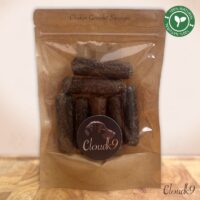
Lower-value treats (such as small biscuits or kibble) can work well for easy, everyday training, like teaching “sit” at home, because there are fewer valuable distractions in the environment compared to outside in real-life situations.
When Should You Reward Your Dog?
For food rewards to actually teach your dog something, timing is crucial. The treat needs to come pretty quickly after the behaviour you want, ideally within a few seconds. That’s how dogs connect the dots.
If you wait too long, your dog might think they’re being rewarded for something else.
Using a marker word like “yes!” or a clicker can help bridge that timing gap and make your communication clearer.
If you’re unsure how often to reward during training sessions, here’s our guide on reward frequency.
How to Use Treats Without Overdoing It
Like everything in life, balance matters. Too many treats can lead to weight gain, so it’s important to factor them into your dog’s daily calorie intake.
A few easy tips:
- Use small, bite-sized training treats (they don’t need to be big, just valuable).
- Deduct treat calories from their regular meals if you’re training a lot.
- Choose natural, single-ingredient treats with no fillers or added sugar.
- Keep sessions short and fun (quality beats quantity).
For more information about how often you should be rewarding your dog during training, check out our guide about reward frequency.
Final Thoughts
Food is one of the simplest and clearest ways to communicate with your dog. It’s not about spoiling them or relying on treats forever. It’s about helping them understand what you’re asking for and making it worth it for them to listen.
When you use food the right way, you’re speaking your dog’s language. You’re showing them that good choices lead to good things, and that training is something to enjoy rather than endure. It’s behavioural science at work.
Training with food builds trust, focus, and confidence. It turns learning into a positive experience and strengthens the bond between you and your dog. Over time, the behaviour becomes a habit, and the food becomes less important because the understanding is already there.
Ready to start training better? All of our natural dog training treats at Cloud K9 are grain-free, contain no added filler, nothing artificial and are made of up to 80% real British meat.
Cloud K9 was created for dog owners who want the best for their dogs. If it’s not natural or good for your dog, it’s not Cloud K9. Our chews and treats are made from real ingredients, naturally prepared, and never packed out with fillers or additives.
Whether you’re looking for something tasty to use for training sessions, a long lasting chew to keep them busy, or support with dental care, take a look at our natural treats and chews chosen to help dogs live their best.

