
Results
How this is calculated
Methodology & Safety Note: Our interactive tool utilises the exact step-by-step exponential formula 70 × (weight in kg)^0.75 as established within the WSAVA Global Nutrition Guidelines to calculate foundational metabolic needs. Daily lifestyle adjustments and the 10% treat allowance constraint follow standard clinical guidelines to ensure safe feeding practices.
This calculator estimates baseline energy requirements for healthy dogs. It is for educational purposes only and does not replace tailored veterinary advice. Always consult your vet before making major adjustments to an overweight, underweight, or medical-needs animal.
How Many Calories Should My Dog Eat Per Day?
One of the most common questions dog owners in the UK ask is, "How many calories should my dog eat each day?" The answer to that depends on your dog's body weight, age, activity level, whether your dog has been neutered and your dog's current body condition.
It can be really easy to overfeed your dog and even a small daily calorie surplus can be enough to lead to gradual weight gain over time. Meals, snacks, training treats, table scraps and long lasting chews all contribute to your dog's total daily intake.
The Cloud K9 calorie calculator above uses established veterinary nutritional methodology to estimate your dog's daily energy requirements. It also provides a safe treat allowance to help you make sure that your dog gets the right amount of treats per day. As a general guideline, treats should not make up more than 10 percent of your dog's total daily calories.
How Dog Calorie Needs Are Calculated
Veterinary professionals typically begin with Resting Energy Requirement, often shortened to RER. This is calculated using the formula 70 × body weight in kilograms to the power of 0.75. This method reflects metabolic rate more accurately than body weight alone.
From there, multipliers are applied based on:
- Age, puppies and senior dogs have different energy requirements
- Activity level, working and highly active dogs burn more calories
- Neuter status, which can slightly reduce metabolic demand
- Body condition, which helps determine whether intake should increase or decrease
Two dogs of the same weight may require different calorie intakes depending on body composition, lifestyle and overall condition.
What Is Body Condition Score in Dogs?
Body Condition Score, often shortened to BCS, is a simple way of assessing whether your dog is underweight, a healthy weight, overweight or obese. Veterinary professionals commonly use a 9-point body condition score system, where 5 out of 9 is considered ideal.
Looking at body condition is often more useful than relying on body weight alone. Two dogs can weigh the same but have very different amounts of body fat depending on their breed, build, muscle mass and lifestyle.
In an ideal body condition, your dog's ribs should be easy to feel without excess fat covering, there should be a noticeable waist when viewed from above, and a gentle abdominal tuck when viewed from the side.
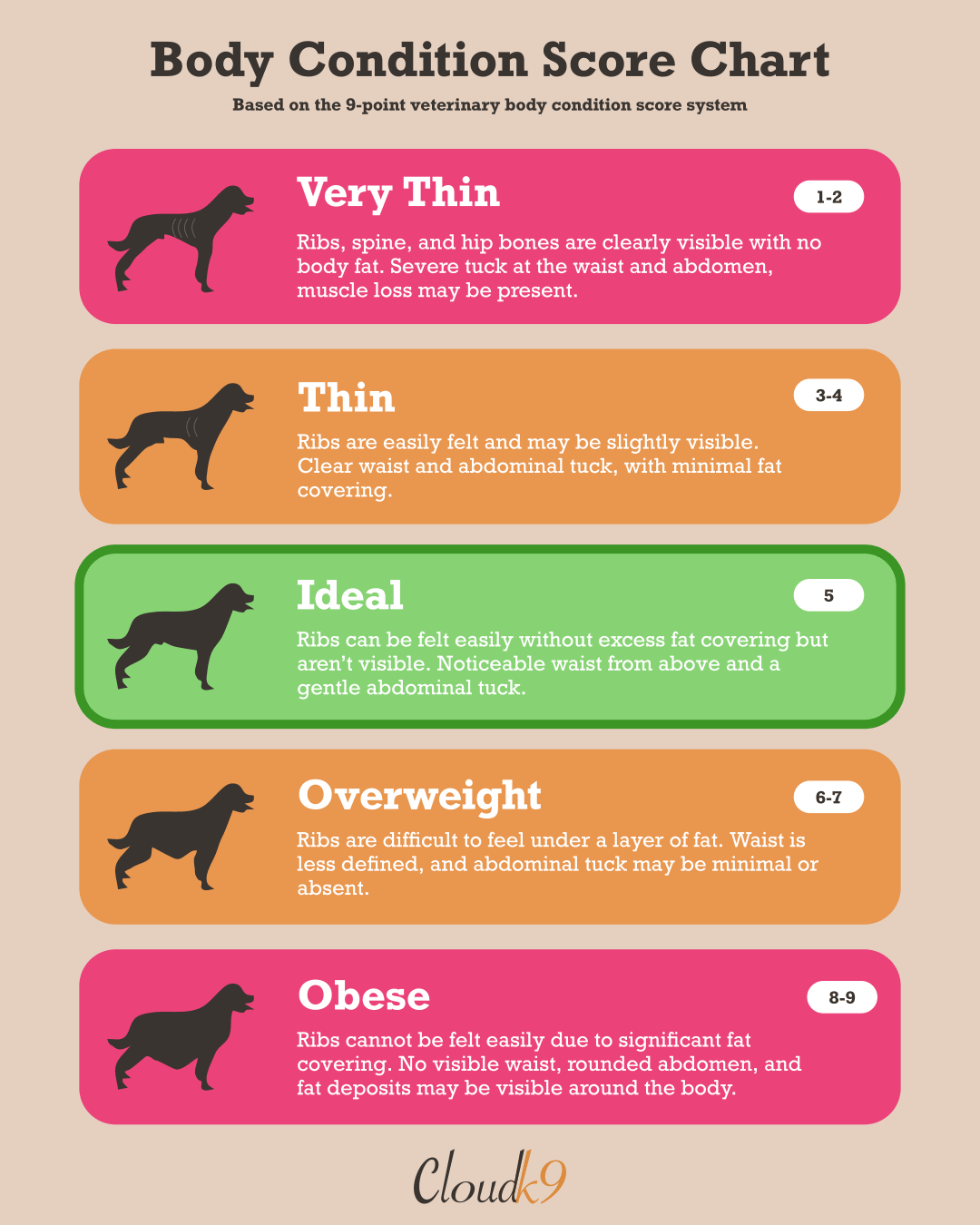
Most dogs should aim to be around 5 out of 9. If your dog is above or below this, their daily calorie needs may need to be adjusted. This is why body condition is included in the Cloud K9 dog calorie calculator, it helps provide a more responsible estimate than using weight alone.
How to Check Your Dog's Body Condition
To assess your dog's body condition at home, gently feel along the ribs, look for a visible waist from above, and check for an upward tuck of the abdomen from the side.
- Too thin: ribs, spine and hip bones may be clearly visible with very little fat covering
- Ideal: ribs are easy to feel but not prominent, with a visible waist and abdominal tuck
- Overweight: ribs become harder to feel, the waist is less obvious, and the abdominal tuck may disappear
Regularly checking body condition can help you spot gradual weight changes before they become a bigger problem.
How Many Calories Should an Overweight Dog Eat?
If your dog is overweight, calorie intake should be reduced gradually rather than doing it straight away. Reducing your dog's calories quickly can result in muscle loss and an unbalanced diet.
A controlled reduction of around 10 to 20 percent below maintenance is commonly used as a starting point when reducing a dog's calories. Body weight and body condition should be reassessed every 2 to 4 weeks, adjusting intake as needed.
Increasing physical activity and incorporating enrichment into feeding routines can also support safe and sustainable weight management.
How Many Treats Can I Give My Dog?
A widely accepted guideline is that treats should account for no more than 10 percent of your dog's total daily calorie intake. The calculator above automatically estimates this allowance for you.
For example, if your dog requires 800 kcal per day, no more than 80 kcal should come from treats. Choosing smaller, clearly labelled, natural dog treats and natural long lasting chews makes it easier to stay within this limit and avoid unintentional overfeeding.
Responsible treating supports training, enrichment and bonding without contributing to unnecessary weight gain.
Do Puppies Need More Calories?
Yes. Growing puppies require more energy per kilogram of body weight compared to adult dogs. However, calorie needs vary depending on breed size and stage of growth.
Large and giant breed puppies require carefully balanced feeding to support steady development, and veterinary guidance is strongly recommended during growth.
Do Neutered Dogs Need Fewer Calories?
Yes, in most cases after a dog has been neutered their metabolic rate decreases slightly which means their maintainace calories will go down slightly. Some dogs can also become less active after being neutered too which lowers their daily energy expenditure.
It's important to monitor body condition after neutering, as gradual weight gain is common if feeding levels aren't changed.
How Often Should I Recalculate My Dog's Calories?
Calorie needs should be reassessed whenever your dog's weight, life stage or activity level changes. As a general rule, reviewing feeding levels every few months helps ensure intake remains aligned with current needs.
Why Is My Dog Gaining Weight Even Within Calorie Limits?
- Hidden calories from table scraps or chews
- Underestimated treat portions
- Reduced activity levels
- Underlying medical conditions such as hypothyroidism
If weight management is something you are working on, this article from D for Dog shares practical dog obesity tips. If weight gain continues despite calorie control, speak to your veterinary surgeon for professional advice.
References & Veterinary Feeding Guidance
This calculator is based on established veterinary nutritional methodology, including Resting Energy Requirement (RER) calculations and widely accepted activity multipliers used in animal nutrition guidance.
The calorie calculator provides an estimate only. Individual dogs may vary depending on breed, medical history, diet type, environment and much more. For personalised feeding advice, or if you have any concerns about your dog's weight, consult your veterinary professional.


