

Rawhide is an old-school dog chew that is now seen as pretty controversial, and for good reason.
More dog owners are thinking carefully about what they feed their pets, yet rawhide chews are still sold in most places even though we now know the risk and that rawhide is bad for dogs.
If you visit nearly any pet shop in the UK, you’ll see rawhide products on the shelves. Some shops even stock a wide variety of them.
Rawhide was once very common, and many people gave it to their dogs. Today, though, dog owners are looking for better options.
Rawhide is still popular because it’s cheap, lasts a long time, and dogs enjoy chewing it. However, just because a dog likes to chew something doesn’t mean it’s safe or healthy. Dogs often chew on anything they find.
This guide explains what rawhide is, why it can be harmful for your dog, and what safer natural alternatives you can choose.
What Actually is Rawhide?
The name ‘rawhide’ sounds simple and natural. It might make you think it’s just animal skin.
But that’s far from the truth.
Rawhide is a by-product of the leather industry, not the meat industry. When animal hides are processed to make leather goods like shoes, bags, and car seats, the outer layer becomes the leather. The inner layer of the hide is what becomes rawhide dog chews.
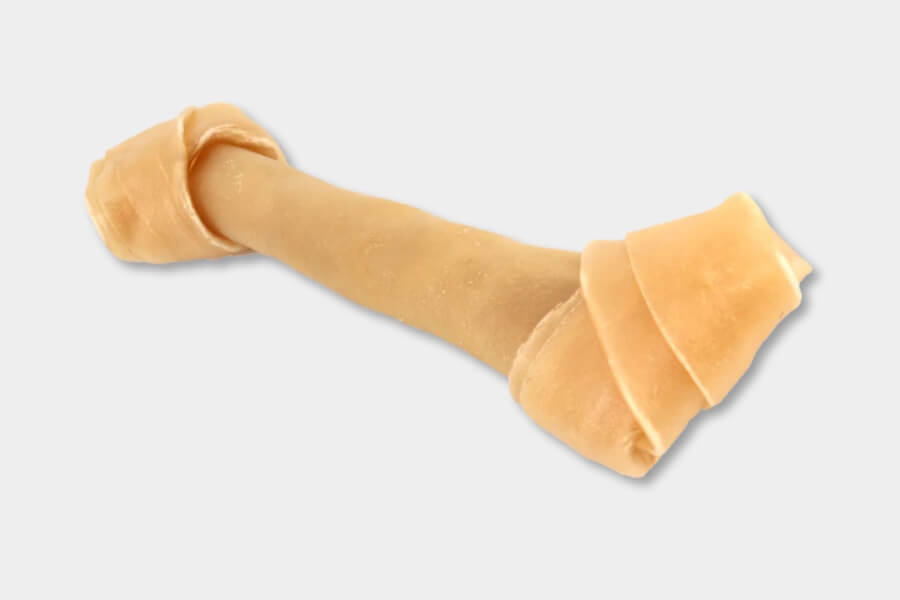
Before the inner layer reaches your dog, it goes through a long process. The hides are treated with chemical brine to slow decay during transport. Then, they are soaked in a lime solution to remove hair and fat, treated with more chemicals to puff up the hide, and washed with hydrogen peroxide or bleach to remove the smell.
After these steps, artificial flavours and colours are often added to make the product look and smell better. Some rawhide chews are also glued into shape.
Most rawhide sold in the UK is made in other countries, where there are often fewer rules about production standards and chemical use than in the UK.
The Risks of Rawhide for Dogs
It’s important to understand the risks that come with giving your dog rawhide.
Choking and Blockages
This is the main concern, the biggest risk and the reason many dogs end up needing emergency vet care.

When a dog chews rawhide, it softens and becomes flexible, like wet leather. At this point, a dog can easily bite off a large piece and swallow it whole. That piece does not digest and can get stuck in the oesophagus, causing choking, or move further into the digestive tract and cause a blockage in the stomach or intestines.
Intestinal blockages are very serious. They can be life-threatening and often need surgery to fix.
The risk is higher for strong chewers who can break off large pieces quickly, but it can happen to any dog. Rawhide is not meant to be swallowed, but dogs do not know that.
It’s Hard for Dogs to Digest
Even in small amounts, rawhide is very hard for a dog’s digestive system to break down. Studies comparing dog chews have found rawhide is the least digestible option. Pieces can stay in the gut for days, causing digestive upset, vomiting, and diarrhoea.
Chemical Contamination
Now that you know how rawhide is made, it’s clear that chemical contamination is a real concern. Bleach, hydrogen peroxide, lime, artificial dyes, preservatives, and sometimes even arsenic, chromium salts, and formaldehyde have been found in rawhide products from overseas.
These chemicals are not there by accident. They are part of how rawhide is made. Your dog ends up chewing on these substances for long periods.
Dental Damage
Rawhide is often advertised as good for teeth. Chewing can help clean teeth, but the chews themselves, especially pressed or glued rawhide, can be very hard before they soften. Cracked and broken teeth from rawhide chews are not uncommon, especially in strong or aggressive chewers.
“But my dog has always been fine with Rawhide”
That’s a fair point. Many dogs have chewed rawhide without any obvious problems. The risks are not a guarantee; they are just risks. Some dogs chew rawhide for years without trouble, while others might need emergency surgery after just one chew.
The problem is you can’t know which group your dog is in, and the consequences can be serious if something goes wrong. That’s why most vets and nutritionists now recommend avoiding rawhide if safer alternatives are available.
Best Rawhide Alternatives in the UK
Now we know why rawhide is dangerous; it’s really important to make sure our dogs are still able to chew safely without becoming destructive chewers, as it’s a huge part of their natural instincts.
The good news is that there are now many natural dog chews available. These options satisfy your dog’s enrichment needs and need to chew without the risks of rawhide.
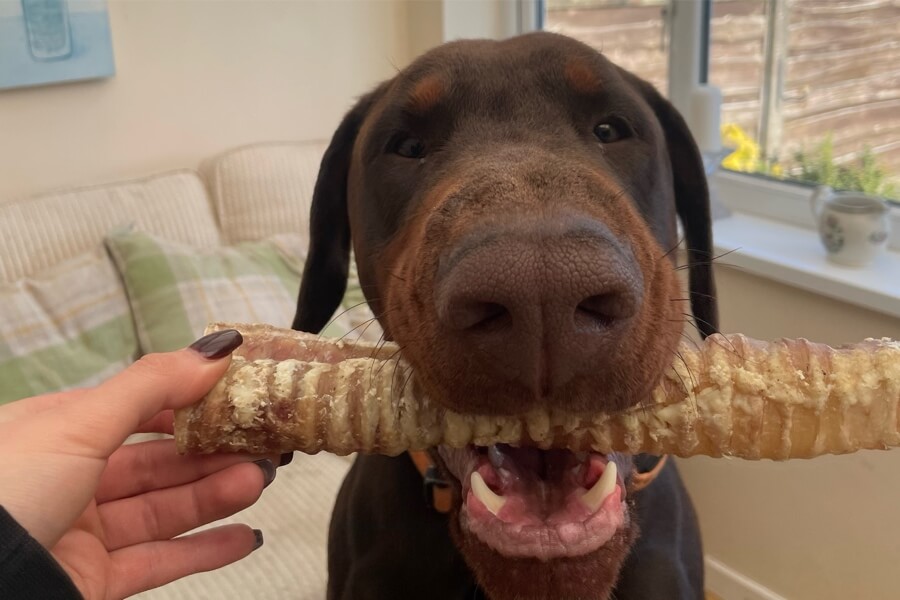
Buffalo Horns: These are dense, durable, and long-lasting. They are a good choice for strong chewers who need something tough. They contain only one ingredient and no processing chemicals.
Yak Chews: Made from hardened yak milk using traditional methods. They are fully digestible, last a long time, and are great for dogs who like a good chewing challenge.
Air Dried Beef Trachea: Softer than a horn or yak chew, and good for moderate chewers or dogs who need something gentler on their teeth.
Fish Skin Rolls: These are a lighter option, great for dogs with sensitivities, and they naturally support coat and joint health.
All of these natural long lasting dog chews have a few things in common. They use single ingredients, have no chemical processing, contain no artificial flavours or dyes, and are actually digestible.
Cloud K9’s long-lasting natural chews are all rawhide-free. Each chew is a single-ingredient, natural product that you can give your dog without worrying about what’s inside.
For more information about what the best alternatives to rawhide for your dog are, check out our full guide on rawhide alternatives. We cover all of the best and safest options so you can find the perfect chews for your dog.
How to Tell if a Dog Chew Contains Rawhide
If you are not sure whether a chew contains rawhide, here is what to look for:
- “Rawhide or “”Hide” on the ingredients list: Rawhide is sometimes labelled simply as “hide” or “beef hide”
- Pressed, rolled or bone shapes: Rawhide is often formed into bones, rolls, or twists using glue or compression
- Unnaturally white or brightly coloured chews: Real natural chews are rarely bright white. That colour usually means bleaching or dye has been used.
- Vague country of origin: “Packaged in the UK” does not mean it was made in the UK. Most rawhide is produced overseas.
If you are unsure, single-ingredient chews with a clearly named source, like buffalo horn, yak milk, or beef trachea, are always a safer choice.
Frequently Asked Questions
In the most serious cases, yes. An intestinal blockage caused by swallowed rawhide can be life-threatening and may require emergency surgery. Many cases are less severe, such as vomiting, diarrhoea, or digestive upset, but the risk of a serious blockage is real and should not be ignored.
Not really. While rawhide starts as animal skin, the finished chew is heavily processed. Chemical treatments, bleaching, artificial flavouring, and often dyeing or glueing make it far from natural in any meaningful sense.
Some may be produced to higher standards than others, and undyed rawhide may carry less risk of added chemical dyes causing digestive upset. But the biggest concerns with rawhide are still the same, poor digestibility, choking risk, and the chance of intestinal blockage, regardless of where it comes from.
If your dog swallowed a small piece and seems completely normal, monitor them closely over the next few days for vomiting, discomfort, changes in appetite, or changes in their toilet habits. If your dog swallowed a large piece, seems distressed, or you are at all unsure, contact your vet straight away.
Buffalo horn and yak chews are both strong rawhide alternatives for dogs that love to chew. They are dense, long-lasting, and less likely to break off into the soft, sticky pieces that make rawhide risky. As with any chew, always supervise your dog and remove it once it becomes small enough to swallow.
Final Thoughts
Rawhide has been around for decades, so it might seem like a safe, established choice. But just because it has been used for a long time does not mean it is safe.
- Rawhide is a leather industry by-product, not a meat product
- It’s processed with multiple chemicals before it reaches your dog
- The main risks are choking, intestinal blockage, and chemical ingestion
- It’s one of the least digestible chews available
- Natural alternatives like buffalo horn, yak chews, and beef trachea do the same job safely
There are so many better natural and health chew options now available for dogs that have real health benefits and are so much safer.
Cloud K9 was created for dog owners who want the best for their dogs. If it’s not natural or good for your dog, it’s not Cloud K9. Our chews and treats are made from real ingredients, naturally prepared, and never packed out with fillers or additives.
Whether you’re looking for something tasty to use for training sessions, a long lasting chew to keep them busy, or support with dental care, take a look at our natural treats and chews chosen to help dogs live their best.

