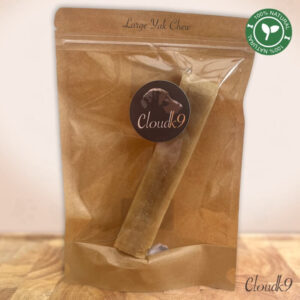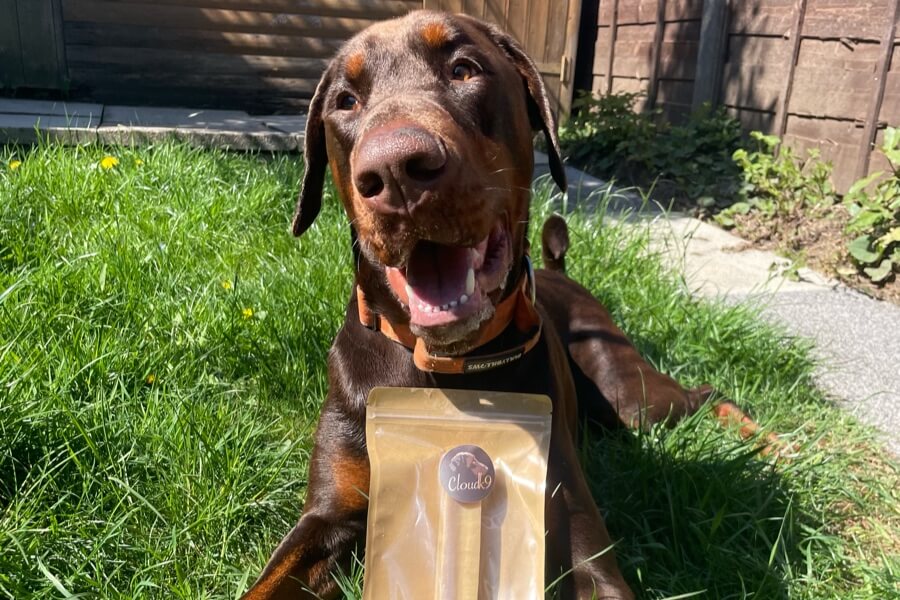
Yak chews have become one of the most popular natural dog chews in the UK. They’ll actually last your dog a long time (unlike dental sticks), have no fillers or additives, are free from the chemicals in rawhide and processed chews, help clean teeth, and most dogs love them.
But before you give your dog a yak chew, there are a few things to keep in mind to make sure a yak chew is safe for your dog. This guide covers what yak chews are, which dogs they suit, how to use them safely, and what to watch for.
Overall, yak chews are a good option for most dogs. Just choose the right size and watch your dog while they chew, as you would with any treat.
What Are Yak Chews?
Yak chews, also called Himalayan yak chews or yak milk chews, are made from hardened yak and cow milk using a traditional Himalayan method. The milk is boiled, mixed with a bit of lime juice and salt, pressed into blocks, and dried for several weeks until it hardens.
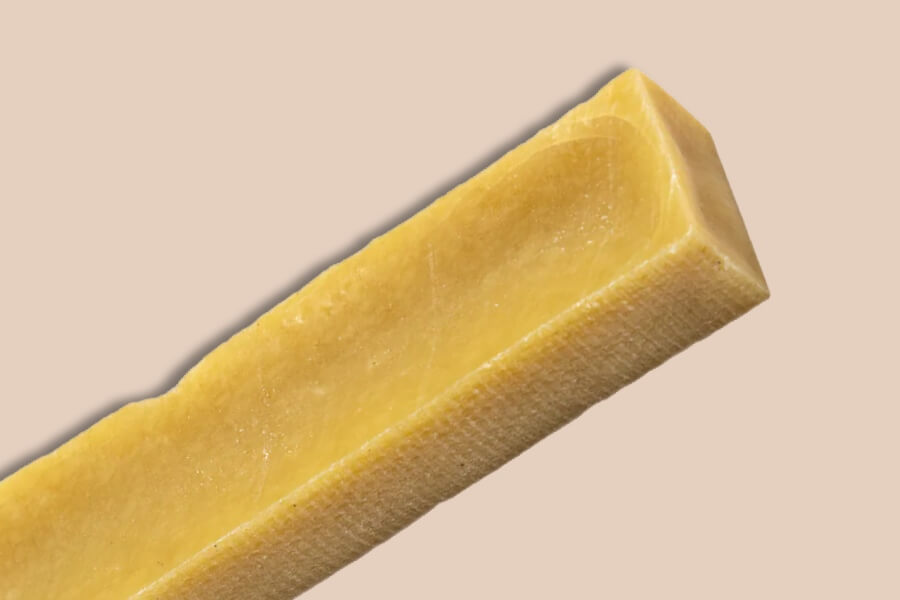
This process makes a dense, long-lasting natural dog chew without artificial additives, preservatives, or chemical processing. The ingredients used to make yak chews are simple and usually only include yak milk, sometimes cow milk, lime juice, and salt.
This is what makes yak chews different from rawhide and more processed dog chews. Rawhide is a by-product of the leather industry and is treated with bleach, hydrogen peroxide, and other chemicals before it gets to your dog. Yak chews are a traditional food product from the Himalayas, and the people who make them have eaten similar cheese for generations.
Are Yak Chews Safe for Dogs?
Yes, yak chews are considered one of the safest natural, long lasting chews for dogs.
They are fully digestible. Unlike more processed options like rawhide, which is hard to digest and can stay in a dog’s stomach for days, yak chews are made from milk solids that break down easily. This lowers the risk of blockages.
They are natural and minimally processed. There are no artificial flavours, dyes, preservatives, or chemical treatments in yak chews. What you see is what you get.
Yak chews soften as your dog chews them. They do not splinter like bones or break into sharp pieces. Instead, the outer layer slowly softens and flakes off in small, digestible bits. This is different from bones that can shatter or rawhide chews that become a sticky lump.
Yak chews keep dogs busy in a safe way. Since they are hard and dense, most dogs take a long time to finish them. This helps keep dogs mentally engaged, calm and supports your dog’s enrichment needs. If your dog sometimes shows destructive behaviours around the house like chewing furniture, chews like yak chews can really help satisfy their biological chewing instincts and help prevent destructive behaviours.
No dog chew is completely risk-free, so it’s important to know what to watch for and to supervise your dog while they chew.
Yak Chew Safety Considerations
If you’re choosing yak chews, quality matters. Poorly made chews can be too brittle or inconsistent in density, which increases risk. Always look for properly cured, high-quality yak chews from trusted sources.
Dental Fractures
Yak chews are very hard, even harder than most natural long lasting dog chews. This is fine for most dogs, but for dogs with brittle teeth, dental problems, or older dogs with worn enamel, the hardness could raise the risk of a cracked tooth.
To see if a chew is too hard, try the thumbnail test. Press your thumbnail firmly into the chew. If it leaves an indent, it’s soft enough. If not, it might be too hard for some dogs. Most yak chews are tough but not as hard as a natural bone.
If your dog has known dental problems, speak to your vet before introducing any hard chew.
Swallowing the Last Piece
The main safety concern with yak chews is the end nub. As your dog chews, the piece gets smaller until it’s small enough to swallow whole. When it reaches this size, you should take the chew away.
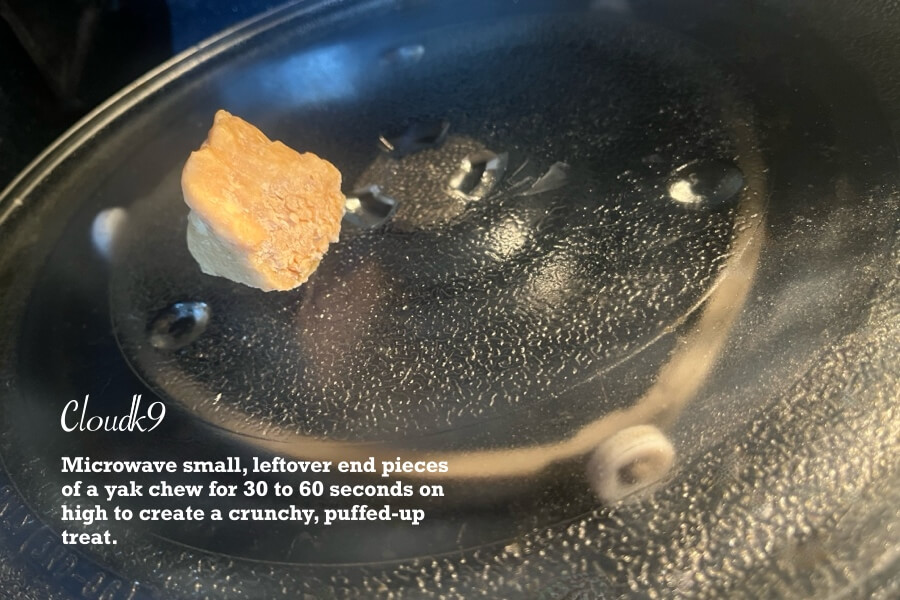
The good news is you can use this last piece by putting it in the microwave for 30 to 60 seconds. The nub will puff up into a light, crispy chew your dog can finish safely. It’s a nice and safe way to turn the end of yak chew into a crunchy bonus treat.
Having too Many Yak Chews
Yak chews are high in protein and have a fair amount of calories. For most dogs, using them as an occasional long-lasting chew is fine. But if your dog is on a calorie-controlled diet, check their calorie requirement and remember to count the chew in their daily intake.
Are Yak Chews Safe for All Breeds?
Yak chews suit most dog breeds, but picking the right size matters more than the breed. Here’s a simple size guide:
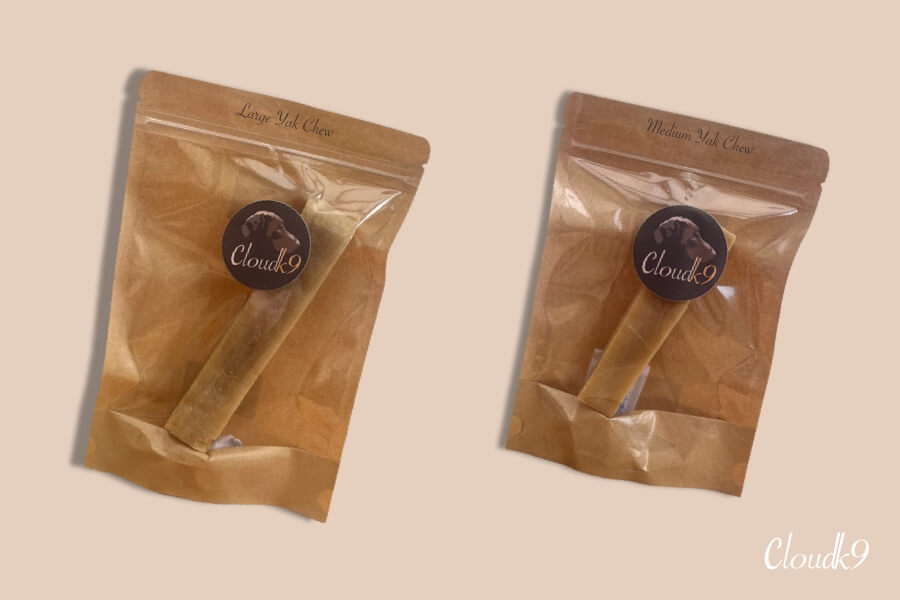
Small Breeds (Under 10kg)
Breeds like Chihuahuas, Shih Tzus, Miniature Dachshunds, and Toy Poodles do well with smaller yak chews, but supervision is important. Small dogs often chew down to the nub faster than bigger dogs, so watch closely for when it’s time to take the chew away or microwave the end piece.
Flat-faced breeds like French Bulldogs and Pugs can sometimes have trouble with very hard chews because of their jaw and teeth shape. Softer options like fish skin rolls or air-dried trachea may be better for these dogs.
Medium Breeds (10–25kg)
Spaniels, Border Collies, Staffordshire Bull Terriers, and similar breeds are usually great candidates for yak chews. They have the jaw strength to enjoy them but are less likely to chew through them too quickly.
Large Breeds (25kg+)
Labradors, German Shepherds, Golden Retrievers, and other large breeds need a chew that matches their size. A small yak chew won’t last long and could be a choking hazard if swallowed in big pieces. Always pick a larger size for big dogs.
Puppies
Puppies under 12 months should not have yak chews. Their teeth are still developing and not strong enough for such a hard chew. After 12 months, you can introduce a puppy-sized yak chew with supervision. It’s best to wait until the adult teeth are fully settled, which is closer to 12 months for most breeds.
Senior Dogs
Older dogs with worn enamel or sensitive teeth may find yak chews too hard. If your senior dog enjoys chewing and has healthy teeth, a yak chew might be fine, but it’s best to check their dental health first.
How to Give Your Dog a Yak Chew Safely
If you follow these simple guidelines, yak chews are a safe option for most dogs:
Pick the right size. Yak chews come in different sizes for a reason. A chew that’s too small is a choking risk, while the right size will last longer and be safer.
Supervise your dog, especially the first time they try a yak chew. Watch how they chew. Are they nibbling gently or trying to bite off big pieces? Most dogs quickly figure out their own pace.
Take away the end piece before it gets too small. If the chew can fit completely in your dog’s mouth, remove it. As mentioned earlier, you can microwave it for 30 to 60 seconds to make a puffed chew, or just throw it away.
Limit chew time if needed. Some dogs will chew for hours if you let them. For most, an hour at a time is enough. This gives their jaw muscles a break and keeps the chew from getting too soft.
Always keep water available. Yak chews are naturally salty, so make sure your dog has fresh water while chewing.
Are Yak Chews Good for Teeth?
Yak chews help clean your dog’s teeth as they chew making them a great natural dental chew for dogs. The gnawing action removes plaque and tartar from the teeth. This is true for most natural chews, and it’s one reason vets often recommend them over softer treats for dental health.
Yak chews are not a replacement for regular tooth brushing or professional dental cleaning, but as part of a routine with natural chewing, they help support oral hygiene.
For dogs that need extra dental support, a special natural dental chew might work better, either along with or instead of a yak chew.
Are There Dogs Who Shouldn’t Have Yak Chews?
A few dogs should avoid yak chews:
- Dogs with dairy sensitivities or milk allergies should avoid yak chews, since they are made from milk solids. Most lactose-intolerant dogs can handle them because most of the lactose is removed during processing, but dogs with true dairy allergies should not have them.
- Dogs with severe dental disease should also avoid yak chews. If your vet has found dental problems, check before giving any hard chew.
- Puppies under twelve months should not have yak chews. Their teeth are not ready yet.
- Flat-faced breeds like French Bulldogs, Pugs, and Bulldogs, who have trouble with hard chews, may do better with softer chews.
If you’re not sure if a yak chew is right for your dog, ask your vet for advice. Our treat finder quiz is also a great way to find the perfect natural treats for your dog.
Frequently Asked Questions
Yak chews are not recommended for puppies under twelve months because their teeth are still developing. After twelve months, you can give a puppy-sized yak chew with close supervision. Always pick a small size for puppies.
Giving any new treat too quickly can cause a temporary upset stomach in some dogs. Start with short chew sessions and build up slowly. If your dog has a sensitive stomach, limit chew time to 20 to 30 minutes at first.
Most lactose-intolerant dogs can have yak chews without problems. The drying and curing process removes most of the lactose. Still, every dog is different. If your dog reacts badly to dairy, introduce yak chews slowly or avoid them.
Microwave it. Put the small end piece in the microwave for 30 to 60 seconds (check after 30 seconds, as times vary). It will puff up into a light, airy chew that your dog can safely finish. Let it cool before giving it back.
How long a yak chew lasts depends on its size and your dog’s chewing style. A medium yak chew usually lasts a medium-sized dog from several hours to several days. They are some of the longest-lasting natural chews you can buy.
Generally, yes. Yak chews are single-ingredient and minimally processed. Dogs with sensitive stomachs often do better with natural chews than with heavily processed ones. Introduce them slowly and watch your dog’s reaction.
Final Thoughts
Yak chews are some of the best natural chews for dogs. They last a long time, are easy to digest, have no artificial additives, and are made with a traditional process that is very different from the chemical-heavy way rawhide is made.
For most dogs, whether small or large, moderate or strong chewers, yak chews are a safe and satisfying choice. They keep dogs busy and help support dental health, too.
The main things to keep in mind with yak chews are to pick the right size, supervise your dog when you first give them a yak chew, take away the end nub before it gets too small, and microwave it for a bonus treat.
If you want something that keeps your dog occupied, supports dental health, and avoids the risks that come with rawhide, yak chews are one of the best options available.
Cloud K9 was created for dog owners who want the best for their dogs. If it’s not natural or good for your dog, it’s not Cloud K9. Our chews and treats are made from real ingredients, naturally prepared, and never packed out with fillers or additives.
Whether you’re looking for something tasty to use for training sessions, a long lasting chew to keep them busy, or support with dental care, take a look at our natural treats and chews chosen to help dogs live their best.