
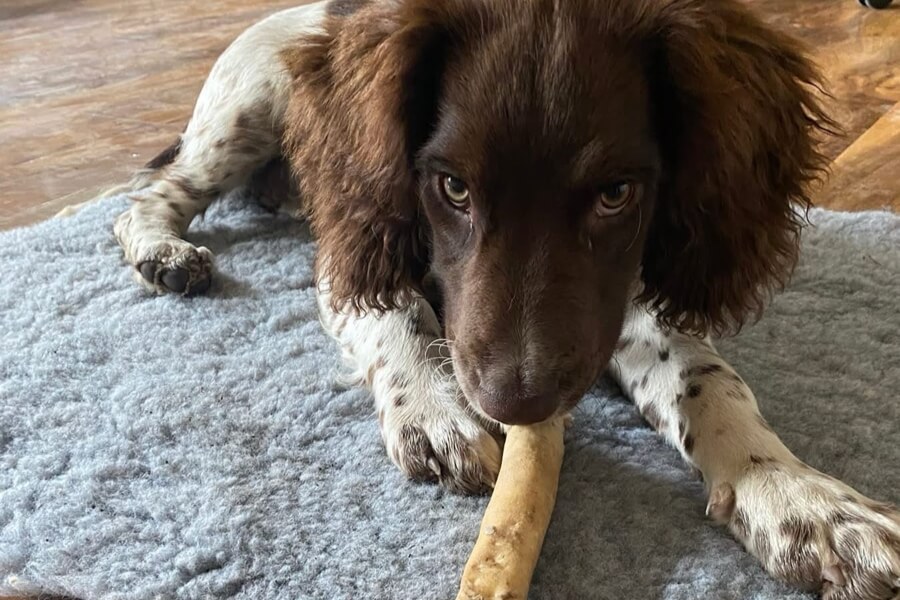
Bringing your new puppy home is one of the most exciting times as a dog owner. You’ve got your cute, new, fluffy family member and probably can’t wait to start giving them loads of delicious treats and snacks to show them how much you love them.
But at this point, asking the question “when can I give my puppy treats?” is the right thing to think about when they’re only 8 weeks old and have only just left mum.
Luckily, by the time your puppy has left the litter, they can start to have some treats from 8 weeks old, but it’s really important to be careful with what you’re giving your puppy at this age.
In this guide, we’ll cover everything you need to know about giving your puppy treats safely, which treats to avoid and what age puppies can have different types of treats.
Why It Matters What Food You Give Your Puppy
Just as a human baby needs food appropriate to its age, a puppy does too.
That’s because puppies have specific nutritional needs that are very different from an adult dog, and their food and treats are made to meet their dietary needs. Puppies grow rapidly and have unique nutritional needs.
Growing puppies generally need:
- Protein: to fuel muscle growth and development. Beef and chicken are great sources for puppies
- Fat: including fatty acids that support brain, eye, skin and coat development as they grow
- Minerals: like calcium, phosphorus and magnesium, that are essential for healthy bone and tooth growth
- Vitamins: to support a developing immune system
For more information about how much food your puppy should be eating each day, try our dog calorie calculator tool. The Cloud K9 calorie calculator is built using vet-approved guidelines based on their age, weight, activity levels and more.
Why Eight Weeks?
Weaning doesn’t happen overnight. Puppies typically start moving from mother’s milk onto solid food at around three to four weeks old.
The transition to solid food lasts a few more weeks, and it is usually complete by seven to eight weeks old, which is also the age most puppies leave their litter and come home.
That doesn’t mean a puppy’s gut is finished developing. It just means they are ready for simple, gentle food, not yet ready for anything rich or hard to digest.
What Kind of Treats Are Safe for Puppies
Not every puppy treat is right for every stage of your puppy’s life. At 8 weeks old, your options are limited, but as they get a bit older, up to 6 months old, there are plenty of choices for your puppy.
Here’s a rough guide by age.
8-12 Weeks
At 8 to 12 weeks old, puppies should only be having soft, tiny, single- or limited-ingredient treats. Puppies at this age are still building their gut microbiome (the bacterial population that does the actual digesting), so anything other than soft natural treats and your puppy will likely have an upset stomach. If you’re starting puppy training early, it’s best to use your puppy’s regular food as well as treats so they don’t have too many.
12-16 Weeks
This is where training really starts, and by this age they can start to have treats more regularly. It’s still best to not overdo it with the treats, so try to keep them as a training tool rather than just a snack. The gut has had a few more weeks to mature, so you can introduce a slightly wider range of soft, natural puppy treats, but keep the texture soft. Teeth and jaw strength still aren’t there yet for anything tougher or long-lasting.
4-6 Months
Adult teeth start pushing through around this stage, and gums get genuinely sore. Soft treats are still the best and safest choice for day-to-day training, but this is also when appropriately sized, long-lasting chews are perfect for teething puppies, now that their jaw strength and tooth structure are far enough along to handle them.
The 10% Rule Matters Most for Puppies
Treats should never make up more than 10% of a dog’s daily calorie intake, and with puppies it’s even more important to be following this rule.
If your puppy needs 400 calories a day, treats should account for no more than 40 of them. That’s not many calories at all, which is why treat size and treat quality matter a lot for puppies.
The best way to stick to the 10% rule is to:
- Use pea-sized pieces instead of full-sized treats
- Always count treats as part of the day’s total food
- Choose low-calorie treats for your puppy
- Avoid treats with fillers and additives
- Avoid treats with vague labelling like ‘meat derivatives’
Treats to Avoid Completely
A few things are worth avoiding entirely for puppies of all ages.
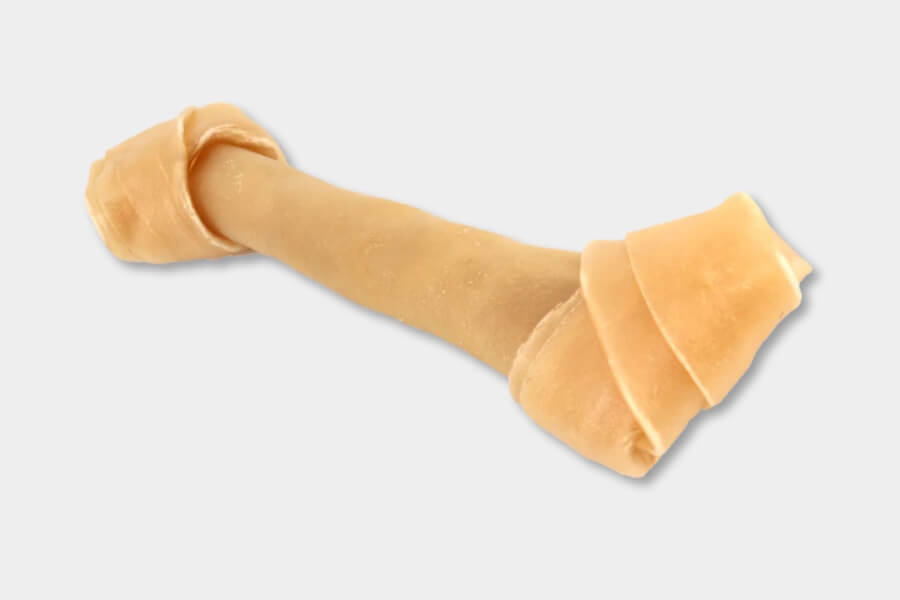
Rawhide is the number 1 thing to avoid. It’s hard to digest, can swell in the stomach once softened, and poses a real choking risk if your puppy manages to bite off a chunk. It’s also often heavily processed, which isn’t what you want going into a developing gut. Dogs of any age should be avoiding rawhide chews. If you have given your dogs rawhide in the past and you’re looking for alternatives for when your new puppy is ready to have tougher chews, check out our guide on rawhide alternatives for dogs.
Cooked bones can splinter easily and can cause serious internal damage if the sharp pieces are swallowed. Raw or air-dried bones are much safer, but it’s best to avoid bones altogether until your puppy is old enough for them.
Avoid any treats that are highly processed, high in salt, sugar, or artificial additives too. Puppies shouldn’t be having the extra sugar or sodium, and additives can cause an upset stomach.
Even though it seems like a nice bonding moment for you and your puppy, it’s also worth knowing that some everyday human foods are genuinely dangerous for dogs of any age, not just puppies. Chocolate, grapes and raisins, onions, and xylitol (a sweetener found in a lot of sugar-free products) can all cause serious harm, even in small amounts. If you’re ever unsure whether something’s safe, it’s always worth checking before offering it.
Sticking to treats made from a high-quality, recognisable ingredient is the best way to avoid all of the above.
What Are the Best Puppy Treats?
When buying treats for your pup, look for treats that are clearly labelled as suitable for puppies. The best treats for puppies have a high nutritional value to support their growth. Most treat packets will state the age range of dogs they are suitable for.
The shorter the ingredients list, the easier it is to know exactly what your puppy’s eating and spot anything that doesn’t agree with them. Cloud K9’s Gourmet Sausage Slices are a good example of this. All of our Gourmet Sausage Slices, Sausages and Strips are made with real meat (like chicken, rabbit, duck and venison), sweet potato and no artificial additives or fillers, which makes them one of the gentlest treats in the range for very young puppies.
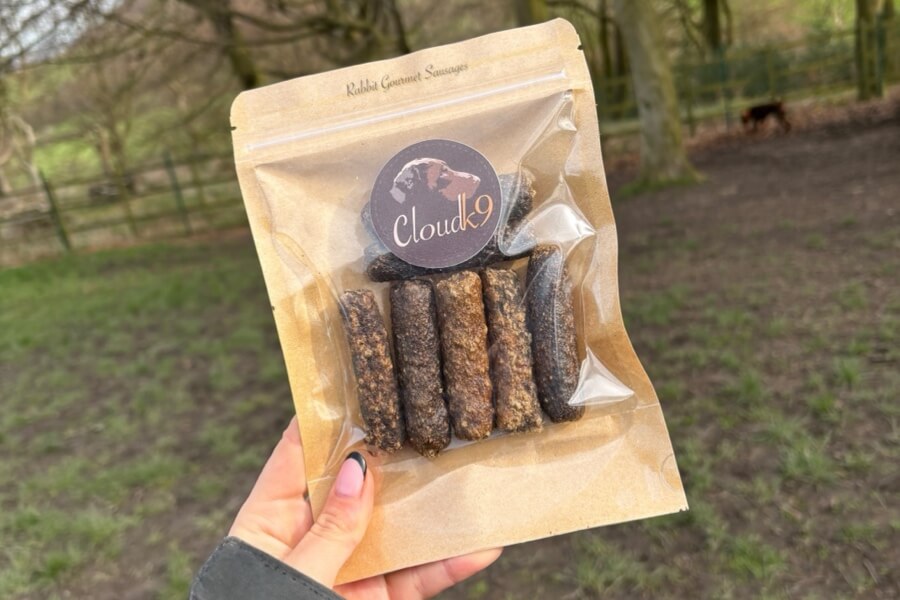
As we mentioned earlier, texture is important for puppy treats. They need to be soft so they are gentle on puppy teeth. All of our puppy treats have information about when you can give your puppy a particular treat from the range. Most are suitable from 8 weeks old, and the smaller chews are clearly labelled for older puppies.
The best puppy treats also have no additives, artificial ingredients or fillers. Cloud K9 is rated Excellent by All About Dog Food, which reflects how much care goes into our range of treats and chews.

If you’re not sure where to start, Cloud K9’s full range of natural puppy treats is built around these exact things, and our treat finder quiz can help find the perfect treats for your puppy’s age and size in less than a minute.
Frequently Asked Questions
Yes, most puppies can start having some treats from around 8 weeks old, once they’ve fully left their litter and moved onto solid food. Only give puppies soft, limited-ingredient treats at this age.
Treats shouldn’t make up more than 10% of your puppy’s daily calories. For a puppy eating 400 calories a day, that’s 40 calories from treats, which usually means small, pea-sized pieces rather than full treats.
Avoid rawhide, cooked bones, and anything high in salt, sugar, or artificial additives. Human foods like chocolate, grapes, and onions are also dangerous for puppies, even in small amounts.
Most puppies aren’t ready for firmer, longer-lasting chews until around 4-6 months, once their adult teeth have come through and their jaw’s had time to develop. Before that, stick to soft treats only.
Final Thoughts
Treats are one of the easiest ways to bond with a new puppy, and they’re the best thing to use for training puppies, so once they’re old enough, there’s no reason to hold back. The main thing to do is matching the treat to the stage your puppy’s actually at.
Soft and natural treats work best at 8 weeks. You can add a bit more variety by 12-16 weeks. And then introduce proper chews once the adult teeth are through.
Don’t forget to keep half an eye on the 10% rule throughout, and read labels the same way you would when buying dog food.
Get that right and treats do what they’re supposed to do. Help with training, build trust, and give your puppy something to genuinely look forward to.
Cloud K9 was created for dog owners who want the best for their dogs. If it’s not natural or good for your dog, it’s not Cloud K9. Our chews and treats are made from real ingredients, naturally prepared, and never packed out with fillers or additives.
Whether you’re looking for something tasty to use for training sessions, a long lasting chew to keep them busy, or support with dental care, take a look at our natural treats and chews chosen to help dogs live their best.

