Dental health is a huge part of your dog’s overall health, so when it comes to choosing dental chews and oral care products, it’s important to know what you’re buying and if it actually works.
For most dog owners, when they think of dental chews, they probably think of dental sticks, and at face value, that makes sense.
They’ve got dental in the name.
They must be good for dogs’ teeth? Right?
Well, not exactly, just because the packaging looks good and has dental claims on the front, it’s usually down to marketing more than anything.
If you’ve ever questioned how a soft stick made of mostly grains and cereals can clean your dog’s teeth, you’ve already asked the right question.
Why Dental Health Matters
Before getting into the comparison of what’s good and what isn’t, it’s worth understanding why we should care so much.
Dental disease is the most commonly diagnosed condition in UK dogs under veterinary care, according to research from the Royal Veterinary College. Around one in eight dogs is diagnosed with periodontal disease in any given year, and that only shows the cases that make it to a vet.
While hot, stinky dog breath isn’t nice, it’s about much more than bad breath. Once gum disease develops, the bacteria don’t just stay in the mouth. Bacteria can enter the bloodstream, and it has been linked to damage to the heart, kidneys, and liver.
Dental disease also causes chronic pain, and it can go on for weeks or months before an owner notices something is wrong.
Dogs can’t tell us they’re in pain, and in a lot of cases, they instinctively hide their pain, making prevention even more important.
What Are Dental Sticks Actually Made Of?
The front of the packaging looks great with bright colours and happy dogs with dental claims plastered all over the place.
If you flip the packaging over and have a look at what’s in them, then it starts to tell a very different story.
Many popular dental sticks are made with cereals, starches, and plant-based derivatives. These are cheap bulking agents that give the stick its shape and make it palatable to your dog, but starchy carbohydrate-heavy ingredients also feed the oral bacteria that cause plaque. There’s a reasonable argument that a significant portion of what’s in these products works against the very problem they’re marketed to solve.
The leading names in the dental stick market are Pedigree Dentastix, Greenies, Purina Dentalife, and Whimzees, not forgetting that most supermarkets now have their own versions too. All of them are heavily processed, and most contain ingredients listed simply as “derivatives”, whether of vegetable or animal origin. Labelling laws don’t require manufacturers to specify what those derivatives actually are in dog treats, so that term on an ingredient list can mean almost anything.
The active dental ingredient, when there is one, typically makes up a tiny fraction of the overall recipe. The rest is filler. So when you see a dental claim on the front of the packet, it’s worth checking what’s inside to see if it’s actually doing any dental work.
Do Dental Sticks Actually Work?
Some do, yes, and it’s important to be fair about that.
So dental sticks are not automatically pointless. That being said, if a dental stick lasts your dog about 20 seconds, it’s likely not really doing anything.
But there are three things worth understanding before you buy.
First off, not every product with the word “dental” on the front of the packet has the same level of evidence behind it.
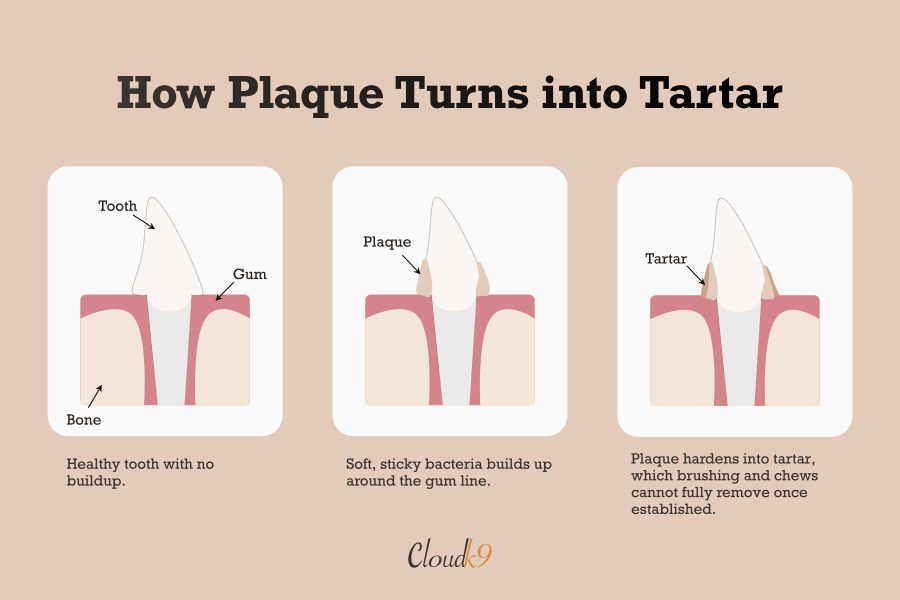
Second, reducing plaque or tartar is not the same as fully cleaning your dog’s teeth or preventing dental disease. It’s still important to clean your dog’s teeth.
Third, ingredients still matter. A dental stick can have some dental benefits while still being a highly processed, cereal-heavy treat containing questionable ingredients that aren’t actually good for your dog.
Dental Sticks are too Soft
For a chew to clean teeth mechanically, it needs to rub against the tooth surface, particularly around the back teeth and the gum line, and that takes time.
If your dog chews through a dental stick really quickly or swallows big pieces of it, there is only a limited opportunity for that to happen.
The shape might look clever, with ridges or grooves designed to reach different areas, but without actually chewing it for a while with contact against the teeth, it can’t really do that much.
This is one of the biggest practical differences between most dental sticks and natural chews. A dental stick might provide some ingredient-based benefit. A longer-lasting natural chew provides more chewing time, more friction, more saliva production, and more natural scraping across the teeth.
Green Doesn’t Mean Clean
A lot of dental sticks are green, and that is not an accident.
Green makes us think of our dental products, mint, freshness, and cleanliness. Some products do contain small amounts of breath-freshening ingredients like mint, parsley, or spirulina, but temporarily fresher breath and clean teeth are not the same thing. A minty smell might make your dog’s breath seem better for a few hours, but it does not mean it’s removed tartar or that your dog’s mouth is healthy.
Bad breath can be a sign of an underlying dental problem. If your dog’s breath smells unusually bad, or you notice red gums, drooling, pawing at the mouth, or difficulty chewing, it’s worth speaking to your vet to get them checked over. Chews can support dental health, but they cannot replace proper veterinary treatment.
Natural Dental Chews for Dogs’ Teeth
So if processed dental sticks aren’t the answer, what is?
Natural dental chews are exactly what they sound like. Chews made from natural animal-based ingredients, single ingredient, minimally processed, with nothing artificial added.
The way they clean teeth is simple. Chewing something with tougher and more real textures and resistance creates friction against the tooth surface. The longer your dog chews, the more contact there is with their teeth and gum line, and the more natural scraping.
There’s no need for an active dental ingredient when the chewing itself is doing the cleaning work properly.
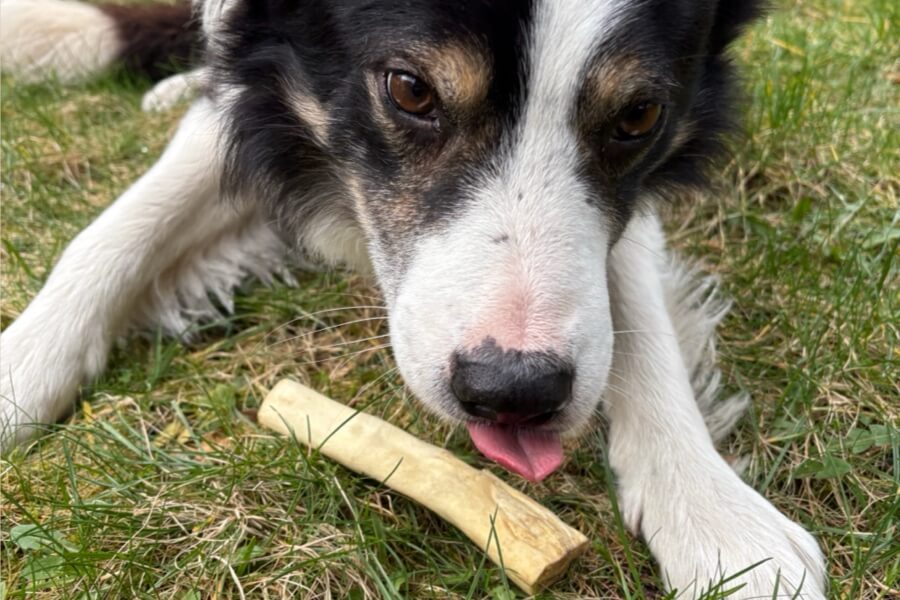
That chewing time is the key thing with natural dental chews. A dog gnawing away at a yak chew or an ostrich bone might be at it for thirty minutes or even more. Compare that to a soft dental stick that is gone in under a minute, and the difference in mechanical cleaning is obvious.
Best Natural Chews for Dental Health
Not all natural chews are suitable, though, and it’s worth knowing which ones to avoid.
Antlers are natural but regularly flagged by vets as a leading cause of tooth fractures in dogs. The same goes for cooked bones.
Here are some of the best natural dental chews for dental health:
- Yak chews are made from compressed dried milk, typically yak and cow, with nothing added other than a tiny amount of salt and lime juice. Yak chews are a safe option for your dog and hard enough to provide sustained abrasion but far softer than bone, and they last a long time, a really long time, which is exactly what you want from a dental chew. Yak chews can last a dog days, sometimes even weeks.
- Beef trachea is another great option. The cartilage texture provides a firm but flexible resistance that works along the gum line as your dog chews through it, and it’s completely digestible. It also contains naturally occurring glucosamine, which is a bonus for joint health.
- Beef moon bone is also solid beef cartilage, firm enough to give your dog a proper chewing workout without the tooth fracture risk that comes with harder bones. The texture creates good contact across the tooth surface, particularly the back teeth, where plaque most commonly builds up.
- Lamb skin rolls and braided buffalo skins both provide a tough, chewy texture that takes real effort to get through. The fibrous nature of the skin works between the teeth as your dog chews, and the sustained chewing time is where the dental benefit comes from.
- Hairy rabbit ears are one of the gentler options and are well-suited to smaller dogs or those new to natural chews. The fur acts as a natural fibre source and provides an abrasive effect as your dog works through the cartilage. They’re also naturally hypoallergenic, making them a good choice for dogs with sensitivities to more common proteins.

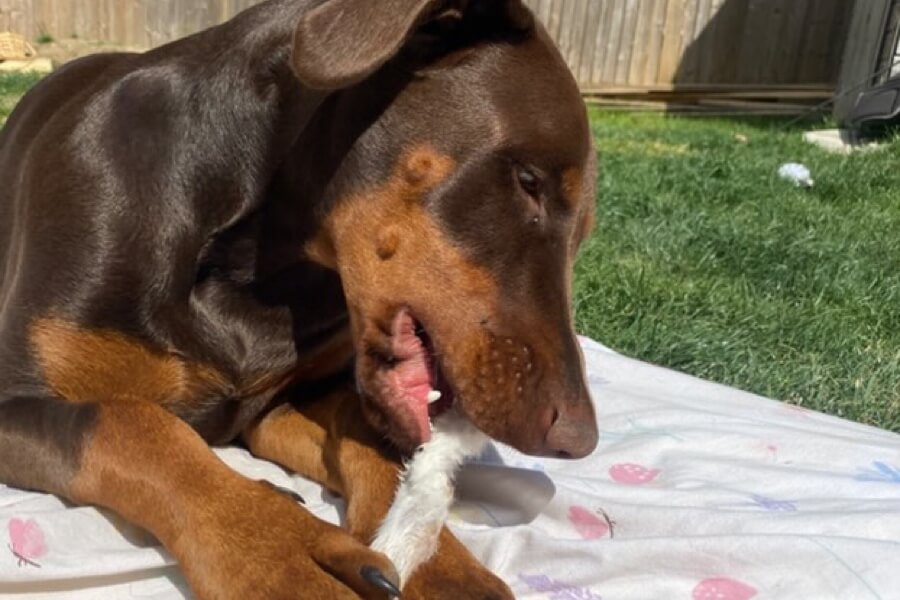
Another great tip is to give your dog raw, frozen vegetables like carrots or celery. They won’t replace a proper dental chew, but the crunch does help scrape away plaque before it hardens into tartar. Many dogs enjoy them (although they may not be too sure at first).
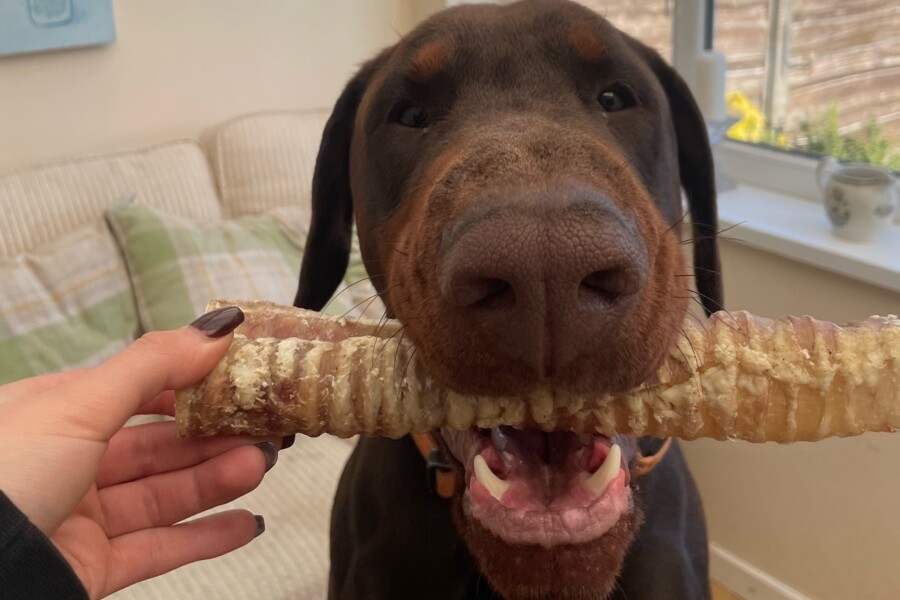
Natural chews aren’t just good for your dog’s teeth either. The act of chewing is one of the most effective forms of mental enrichment for dogs, helping them to settle, decompress, and stay occupied in a genuinely satisfying way. If you want to know more about keeping your dog mentally stimulated, take a look at our enrichment tips.
Frequently Asked Questions
This is a common belief among dog owners, but it’s not actually true. Most kibble is too small and too brittle to have any meaningful impact on your dog’s dental health. Kibble often crumbles on contact rather than scraping along the tooth surface, which is what you actually need for mechanical cleaning.
Most natural dental chews can be given daily, but a few times a week is a good place to start. Consistent chewing is what makes the difference over time, the same way brushing your own teeth once a week would result in plaque and tartar buildup. Check the individual product for guidance on portion size and frequency based on your dog’s age, weight and size.
Most natural dental chews are suitable from around 12 weeks, though this varies by product and chew hardness. Puppies have softer teeth than adult dogs, so gentler options like hairy rabbit ears or softer trachea pieces are better starting points. Harder chews like yak are generally better suited to dogs over one year old once their adult teeth come through.
No, for best results, they are best used together. Brushing is still the best option for dental care at home because it gives you direct control to clean every tooth properly. Natural dental chews are a genuine and effective support, especially for dogs that don’t often tolerate toothbrushing, but they work best as part of a routine that includes brushing where possible and regular vet checks.
Bad breath can have several causes. If your dog has bad breath regularly despite frequent chewing, it could be a sign of existing tartar buildup, gum disease, or another underlying issue that chews alone can’t fix. It’s worth getting their teeth checked by your vet. If your dog’s breath has suddenly changed or you notice other symptoms such as inflamed gums, drooling, or difficulty eating, see your vet as soon as possible.
For most dogs, yes. Natural chews last longer, which means more mechanical cleaning. They’re also made from ingredients properly suited to dogs, with no starchy fillers or artificial additives. The cleaning happens the way it’s supposed to, through real chewing resistance rather than a soft stick gone in under a minute.
Final Thoughts
If you’ve made it this far, you probably already know the answer.
Dental sticks aren’t completely useless, and we’ve tried to be fair about that throughout. Some have evidence behind them, and when used consistently, the better-formulated ones are better than using nothing at all. But as a category, most are made with cheap fillers with a small fraction of an active ingredient doing the actual work, wrapped in green packaging and marketed with claims that don’t hold up very well.
Natural dental chews do the job better. They last longer, they’re made from ingredients that are actually good for your dog, and the cleaning happens naturally through chewing against a surface with tough textures and resistance. There are no artificial colours, no derivatives, no starchy base working against the very thing you’re trying to achieve.
The best dental routine for your dog combines regular brushing, routine vet checks, and a good natural chew as part of their daily life because it genuinely makes a difference to their long-term health.
Cloud K9 was created for dog owners who want the best for their dogs. If it’s not natural or good for your dog, it’s not Cloud K9. Our chews and treats are made from real ingredients, naturally prepared, and never packed out with fillers or additives.
Whether you’re looking for something tasty to use for training sessions, a long lasting chew to keep them busy, or support with dental care, take a look at our natural treats and chews chosen to help dogs live their best.