
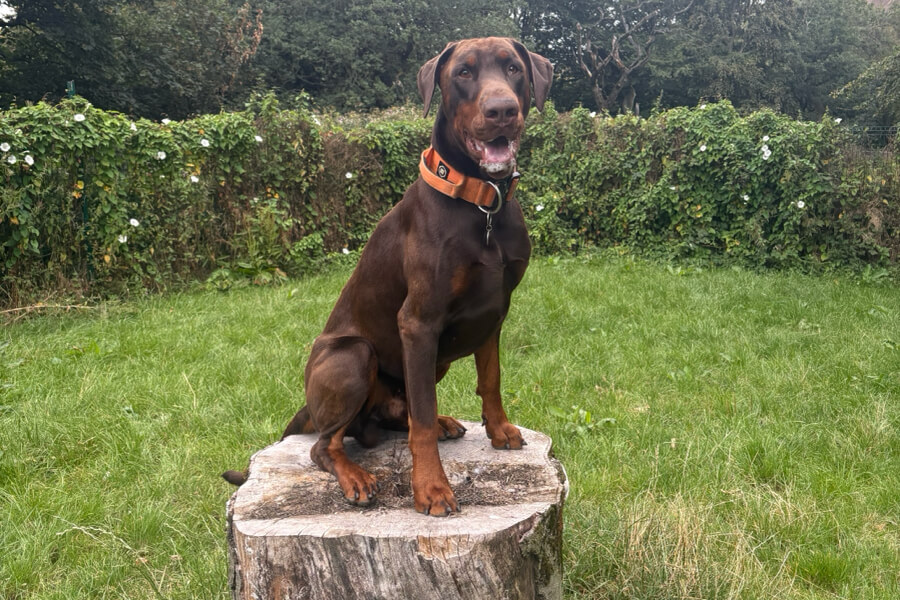
Most dogs LOVE food!
They love their meals, treats, chews, and always bring out the puppy dog eyes for anything you’re eating.
They’ll happily take treats at home.
But then it comes to training sessions… You head out the door to get started, and they’re suddenly not interested in the exact treats they were happy to have at home.
It can be pretty frustrating. You’re trying your best to train your dog, but suddenly the reward you’re offering just isn’t valuable enough.
Training a dog that doesn’t seem interested in food can be hard. Really hard.
The good news is that a dog who appears to be “not food motivated” isn’t necessarily a dog that can’t be motivated by food.
Quite often, you just haven’t found a reward valuable enough for that dog, in that particular environment.
The piece of kibble they’ll happily sit for in your living room might have absolutely no chance against another dog, an interesting smell, a squirrel or an exciting walk.
Finding the right high-value training treat can completely change what you can work on together.
Are Some Dogs Really Not Food Motivated?
Yes, there are some dogs that have a low food drive. All dogs are different, and food isn’t equally motivating to all of them.
Some dogs may prefer play as a reward, being allowed to sniff, or a simple “good boy” and a bit of a fuss.
But there is also an important difference between:
“My dog isn’t food motivated” and “the food I’m offering isn’t interesting enough right now“.
Those can be two very different things.
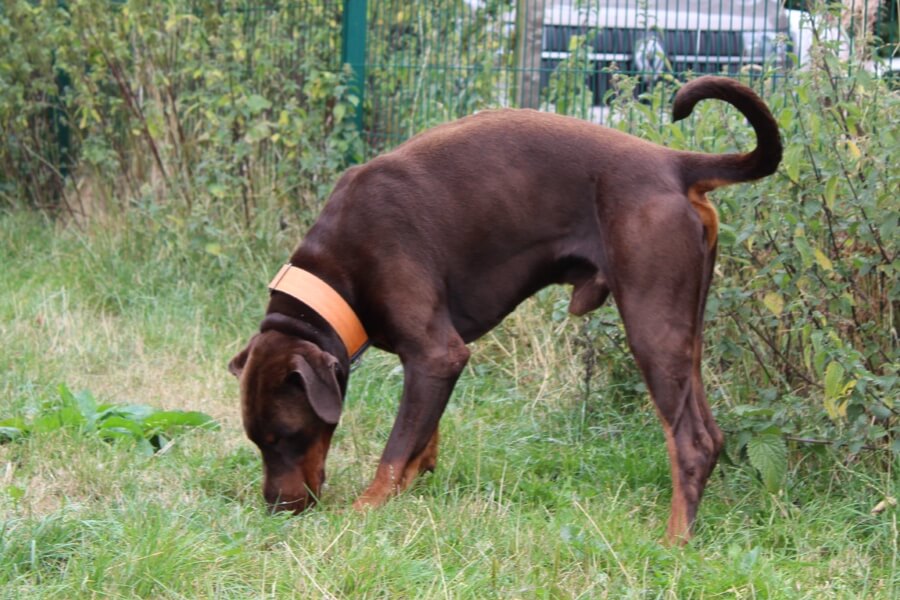
If your dog happily eats meals and loves having treats around the house, there clearly is value in food to them.
What changes when you’re outside is that there is a lot of competition for their attention.
At home, having a treat may be the most interesting option available.
Out on a walk, your treat is competing with smells, other dogs, people, exploring and everything else happening around them.
Suddenly the treat in your hand is at the bottom of the list of what they care about.
Food motivation can change depending on where you are and what’s happening around your dog.
This is why we don’t think it is great to simply label a dog as “food motivated” or “not food motivated“.
A dog can be extremely food motivated in one situation and totally uninterested five minutes later.
The value of the food hasn’t necessarily changed.
The value of everything around them has.
And that’s really important when you’re working on behaviours like recall, loose lead walking or engagement around distractions.
Your treat competes with whatever your dog would rather be doing at that moment.
Why Food Is Such a Useful Reward for Dog Training
Dogs can find lots of things rewarding.
Play, praise, toys, sniffing, and access to the environment can all be used during training.
But food has some major practical advantages.
It’s quick and a very clear reward.
You can give food rewards to your dog at exactly the right moment, and you can easily repeat the reward again and again without having to stop the training session.
And most importantly, it gives your dog a very clear message for a behaviour:
You did that, and something good happened.
That’s incredibly useful when you’re trying to teach something new.
Research also supports food as a powerful reinforcer.
A 2023 study comparing dogs’ preferred food rewards with preferred leisure items found that food generally functioned as the stronger reinforcer. Dogs completed more work for edible rewards than they did for their favourite leisure items.
That doesn’t mean toys or play don’t work.
They absolutely can.
It simply helps explain why food remains such a useful training tool for so many dogs.
What Makes a Good High-Value Training Treat?
There isn’t one ingredient that automatically makes a training treat high value to a dog.
But several things can make a treat more useful and interesting when you’re trying to motivate a dog.
- A strong smell is important because your dog can’t see what’s in your hand from the other side of a field, so the smell needs to do a lot of work before they’ve even seen the treat.
- Meat-rich treats often have the strong smell and rich flavour that can make them especially useful for training. For a dog that isn’t interested in ordinary biscuits, trying a treat made predominantly from meat or fish can be a good place to start.
- Rich flavour ties in with meat content, but it’s worth mentioning on its own. A treat you know your dog loves is doing half the job for you before you’ve even recalled them.
- Soft or quick to eat. Recall treats need to be eaten in a couple of seconds, not take thirty seconds of chewing. The moment your dog stops to chew, their attention’s left you again, and you’ve lost the momentum of the recall.
- Something different from their everyday food. If your dog eats the same flavour every day, offering more of exactly the same thing during a difficult training exercise may not be particularly exciting.
The Best Training Treats for Dogs That Aren’t Food Motivated
Again, there isn’t a definitive answer here, and there isn’t one universal “best treat” because every dog has different preferences.
But the best place to start is choosing treats that generally make a high-value reward and have the characteristics mentioned above.
All Cloud K9 training treats are made with these things in mind. These are some of our favourite options for high value training rewards.
Cloud K9 Venison Sausage Slices
These are our personal first choice for a dog who needs a genuinely high-value reward.
And there’s a very specific reason for that.
They’re Archie’s favourite training treat.
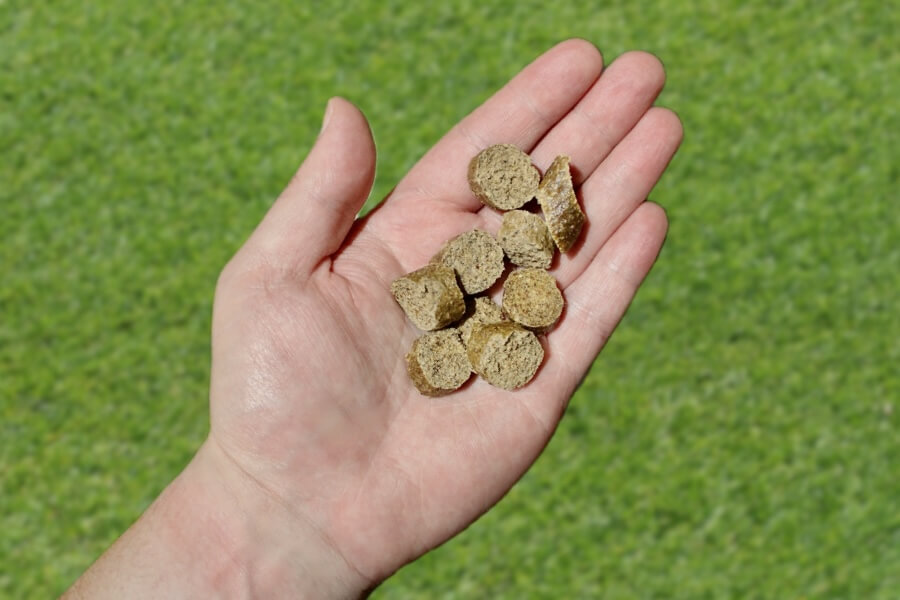
Our Venison Gourmet Sausage Slices are made with 40% fresh venison alongside chicken, sweet potato and minerals. They’re soft, easy to break apart and can be divided into tiny training-sized pieces.
That means one slice can become several rewards rather than one large treat.
They’re useful for recall training, loose lead walking and engagement around distractions.
But our opinion isn’t the only reason we love venison sausage slices.
We’ve also been seeing the same thing in customer feedback.
One customer described Cloud K9 Venison Slices as:
“really handy for training and keeping him engaged.” Another specifically said they “definitely keep his interest“.
For us, that’s much more meaningful than simply calling something “high value”.
Owners are actually using them during training and noticing a difference.
Cloud K9 Venison, Duck or Rabbit Meat Strips
Cloud K9 Gourmet Meat Strips are another great high-value option.
They’re meaty, aromatic, grain-free, and easy to cut into tiny training-sized pieces, so one strip can give you plenty of rewards.
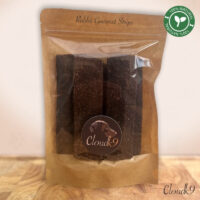
They also come in venison, duck, and rabbit, making it easy to test different proteins and find out what your dog values most.
Cloud K9 Sprats
Some dogs go absolutely wild for fish treats.
If that’s your dog, sprats can be a game-changing option for training.
They’re 100% fish and naturally have a completely different aroma and texture from meat-based sausage treats.
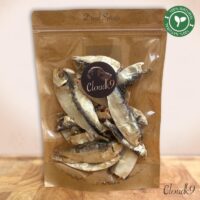
They’re not always our first choice for quick, repeated rewards because they’re crunchier than soft sausage slices.
But as an occasional higher-value reward and in the right situations, they can be brilliant for the right dog. Especially for things like recall training.
What Archie Taught Us About Food Drive
We’ve experienced all of this ourselves when we first started training Archie.
Before Cloud K9 existed, we struggled to get Archie interested in treats when we were out.
At home? No problem, he was great at everything and picked things up really quickly.
He’d happily take treats for behaviours and commands.
But outside was completely different.
The environment was more interesting than anything we had in our pocket.
There were smells to investigate, places to go and things to watch.
At times he’d literally take a treat and spit it back out.
It made training much harder because we didn’t have a reward he really cared about.
And when you’re trying to communicate clearly with a dog, that’s a problem.
You can mark the right behaviour perfectly, but if what comes afterwards has almost no value to the dog, you’ve lost one of the easiest ways to reinforce that behaviour.
Finding rewards Archie genuinely valued changed that.
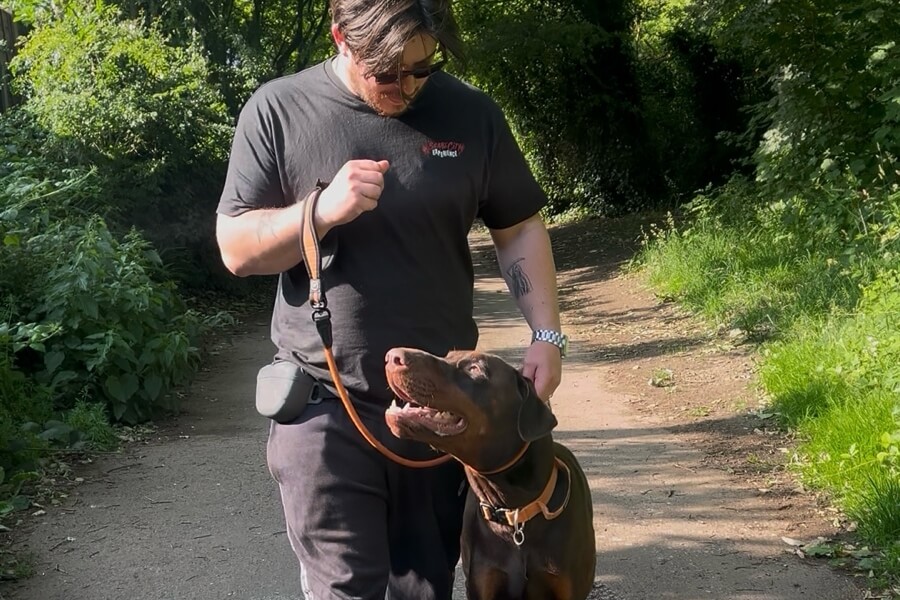
For him, the biggest difference came with our venison slices.
Suddenly we had something worth working for.
That gave us a practical way to build much better engagement on walks.
We’ve used them while working on his loose lead walking, heel work, checking in with us and training around distractions.
They’ve also been incredibly useful when working around his reactivity because we finally had a reward valuable enough to compete for his attention in situations where lower-value treats simply couldn’t.
The treat didn’t magically train those behaviours for us.
We still had to do the training.
But having a reward Archie genuinely wanted meant we could finally communicate and reinforce the behaviours we were trying to build.
That’s a really important distinction.
The best training treat doesn’t replace good training. It gives good training something valuable to work with.
How to Find Out What Your Dog Really Finds High Value
Before you start testing treats on a busy walk, there are a couple of really easy things you can try at home.
And we’d actually recommend starting there to find the perfect training treat for your dog.
At home, there aren’t many competing distractions.
No dogs walking past, no exciting smells and no squirrels.
That makes it much easier to try and find out the actual value of the reward itself.
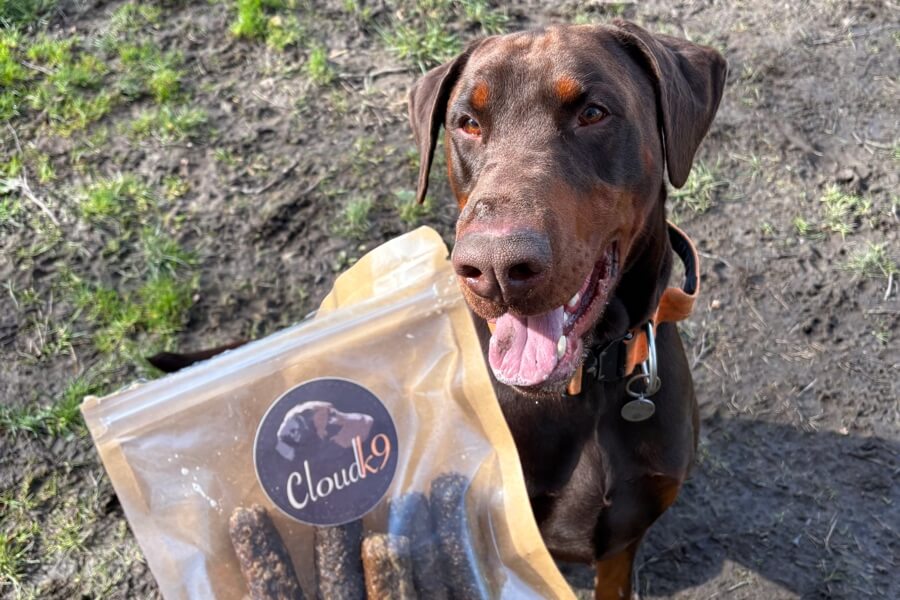
Choose a few treats you want to compare and test them separately.
Try teaching your dog something new and see how much effort they put into figuring it out.
Or ask your dog to sit, down, paw, touch (whatever works for you). If they suddenly respond faster, stay focused and seem eager for the next cue, you’ve probably found a treat they really value.
Don’t just look at whether your dog eats them.
Almost any dog might happily eat several different treats when they’re offered for free.
Instead, look at how much your dog is willing to work to get another one.
Once you’ve found the treats your dog works hardest for at home, start testing them in more distracting environments.
How to Make Food More Motivating During Training
Once you’ve found something your dog actually likes, you can make it even more effective by changing how you use it.
- Keep your best reward special: Don’t give your dog’s favourite treat out constantly. Save it for training so it keeps its value.
- Match the reward to the difficulty: Easy behaviours can earn regular treats. Harder choices around distractions should earn something better.
- Use tiny pieces: Small rewards let you reinforce more often without giving your dog loads of extra food.
- Reward quickly: Mark the behaviour and reward straight away so your dog clearly understands what they did right.
- Make things easier if needed: If your dog won’t take even their favourite treat, the environment may simply be too difficult. Add distance or reduce distractions.
- Rotate rewards occasionally: Switching between two or three high-value treats can help keep training interesting.
Can You Train a Dog Without Food?
Absolutely.
Food is a training tool, but it isn’t the only possible reward.
Some dogs genuinely love toys and play.
And in certain situations, play can be incredibly powerful.
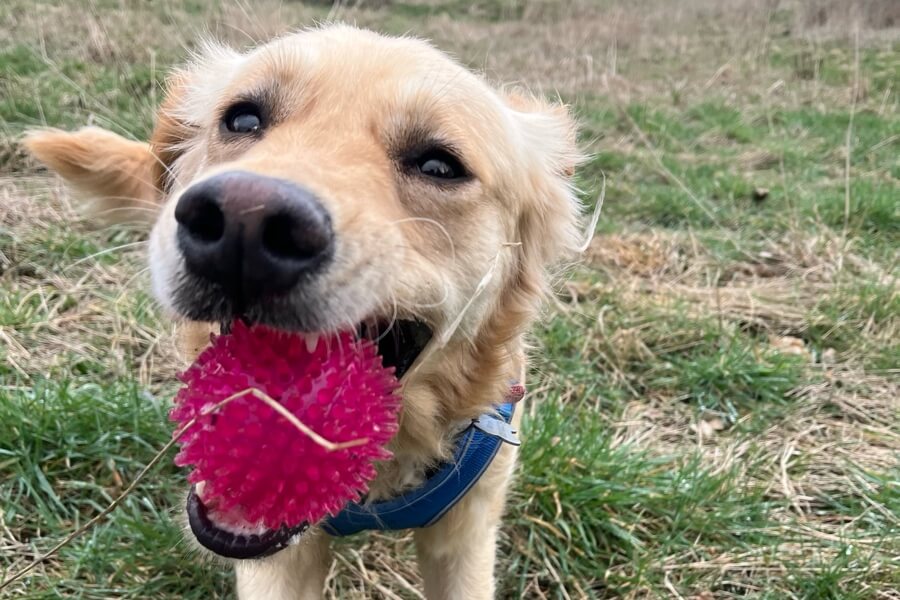
Here are some other options to use when you’re not using food rewards:
- Use play as the reward: If your dog loves tug or another toy, use a short game as the reward for behaviours like recall. Coming back to you should unlock something they really enjoy.
- Use the environment as the reward: Sometimes access to what your dog wants can be the reward. Ask for a behaviour, then release them to sniff, explore or carry on with what they wanted to do.
Frequently Asked Questions
Yes. Food is extremely convenient for training, but dogs can also be rewarded with toys, play, praise, access to sniffing and other things they value.
Before abandoning food completely, however, try several genuinely high-value treats and test them in different environments. A dog who refuses one treat isn’t necessarily uninterested in all food rewards.
There isn’t one food every dog considers high value.
Soft, aromatic, meat-based treats tend to be particularly practical because they’re appetising, quick to eat and easy to break into small pieces.
Venison, duck, rabbit, chicken, pork and fish are all worth trying.
You shouldn’t deliberately deprive your dog of food to make them train.
However, a dog who has just eaten a large meal may naturally be less interested in food.
Scheduling a short training session before their normal mealtime can sometimes make rewards more appealing while keeping their normal feeding routine intact.
Yes. For a dog who loves tug or another particular toy, a short game immediately after returning can be a powerful recall reward.
You can also mix rewards. Sometimes recall earns food. Sometimes it earns play.
Sometimes your dog comes back, gets rewarded and is immediately released to continue exploring.
The important thing is making returning to you worthwhile.
Don’t judge it by the packet. Watch your dog.
A genuinely high-value reward should usually be accepted quickly and leave your dog interested in earning another one.
Try the reward in progressively harder environments.
If your dog happily takes it at home but refuses it outside, its value probably isn’t high enough for that particular situation, or the situation itself may currently be too difficult.
Final Thoughts
The best training treat is simply the one your dog thinks is worth working for.
If your dog happily takes treats at home but loses interest outside, don’t immediately assume they aren’t food motivated. Try something higher value, experiment with different proteins and flavours, and pay attention to how much effort they’re willing to put in to earn another piece.
For one dog, that might be venison. For another, it could be fish, rabbit, duck or something completely different.
And remember, the harder the environment, the more valuable your reward may need to be.
If even their favourite food isn’t cutting it, make the training easier or use something else they genuinely value, like play or being allowed to sniff.
Finding the right reward won’t do the training for you, but it can make training a whole lot easier.
Cloud K9 was created for dog owners who want the best for their dogs. If it’s not natural or good for your dog, it’s not Cloud K9. Our chews and treats are made from real ingredients, naturally prepared, and never packed out with fillers or additives.
Whether you’re looking for something tasty to use for training sessions, a long lasting chew to keep them busy, or support with dental care, take a look at our natural treats and chews chosen to help dogs live their best.

